Interactive Brokers tells HMRC nothing about your shares and its annual statement uses the wrong matching rule

Published 22 October 2026 Reviewed against gov.uk 16 October 2026 9 min readCapital gains tax
Interactive Brokers reports nothing about your share, ETF, bond or option trades to HMRC, and the return you file is built from statements designed for a different tax system. UK residents hold their account with Interactive Brokers (U.K.) Limited, authorised and regulated by the FCA under reference 208159, and the account is cleared and carried by Interactive Brokers LLC in the United States, per the firm’s UK disclaimers. That structure explains most of what follows. The year-end Annual Statement is matched First In, First Out, the Dividend Report is built around US withholding, and the cash you leave in dollars is a chargeable asset HMRC expects you to have tracked. Every figure below was read on GOV.UK, legislation.gov.uk and Interactive Brokers’ own pages on 16 October 2026.
The Annual Statement answers an American question. HMRC asks a different one, and the pool is the answer.
Which Interactive Brokers account you hold decides the tax
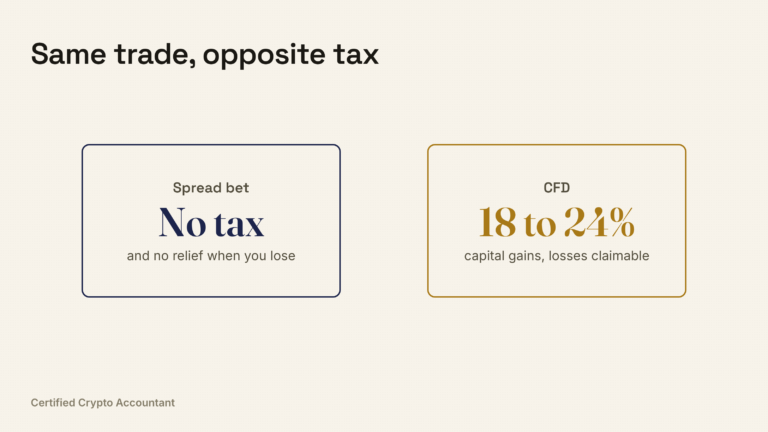
The Stocks and Shares ISA sits outside all of it. Interactive Brokers’ ISA page says a UK resident aged 18 or over can subscribe up to £20,000 a tax year, income earned is tax free, as are gains when you sell, and the account must be funded in sterling. A SIPP is held through a separate FCA authorised administrator rather than with Interactive Brokers directly. Everything in the ordinary account is taxable above the allowances, and that is the account this guide is about. Contracts for difference and spot currency are among the limited products carried by the UK entity itself and are taxed as derivatives, which our CFD guide and forex guide cover.
What Interactive Brokers reports to HMRC
For shares and funds, nothing. The Common Reporting Standard makes UK brokers report accounts held by people who live abroad, and when the government considered extending it to UK residents’ own accounts it decided against, in a response published on 30 October 2024. The tax residency and tax identification number Interactive Brokers collects at account opening feed that overseas exchange and the US W-8BEN, which is why the questions arrive whether or not you ever trade. What HMRC knows about your account is what your Self Assessment return says.
Crypto is the exception. Interactive Brokers (U.K.) Limited is registered with the FCA as a cryptoassets firm under the money laundering regulations, and UK clients can buy Bitcoin, Ether, Solana and other tokens through Paxos or zerohash on the same platform, per the firm’s 14 July 2026 release. A UK registered cryptoasset business is a reporting provider under SI 2025/744 from 1 January 2026, with the first reports due to HMRC by 31 May 2027. Our CARF guide explains what that feed contains. Shares stay off it.
The Annual Statement is FIFO and HMRC does not use FIFO
Interactive Brokers’ year-end reports page says the Annual Statement “shows trade detail for account gain and loss for stocks, options, bonds, single stock futures, futures and futures options on a First In, First Out (FIFO) matching basis or the specific method of tax accounting selected for your account.” Those methods, and the lot-matching tool that switches between them, exist for the US lot system. HMRC’s rule at CG51560 is a fixed order. A sale is matched first to shares bought the same day, then to shares bought in the 30 days after the sale, then to the section 104 pool of everything else at its average cost.
Take 100 shares bought at £10, 100 at £14 and 100 at £18, then sell 100 at £16. FIFO matches the sale to the £10 lot and reports a £600 gain. HMRC’s pool holds 300 shares at £4,200, an average of £14, so the gain is £200. Sell 100 at £12 in March and buy 100 back in early April and FIFO shows a gain while HMRC matches the sale to the repurchase under the 30 day rule, which is the loss that vanishes in our shares guide. A year of monthly ETF purchases produces twelve acquisitions, each one able to catch a sale made in the previous month. The Trading 212 guide works the same arithmetic through, and in my experience the Interactive Brokers version is harder only because the statement looks more authoritative.
Dollar shares, dollar cash and the currency gain nobody tracks
Most of what UK clients hold on the platform is priced in dollars, and HMRC’s rule at CG78310 is that the cost of a share is the sterling value of the dollars paid on the day you bought and the proceeds the sterling value on the day you sold. You cannot work the gain in dollars and convert the answer. A share that went nowhere in dollars while sterling fell has a gain, and the reverse is a loss you can claim.
The dollar cash balance itself is the step most people skip. HMRC’s manual at CG78300 says currency other than sterling is a chargeable asset and its disposal can give rise to a chargeable gain or an allowable loss. The exemption individuals rely on for foreign currency bank accounts, in section 252 TCGA 1992, is written for a debt owed by a bank and represented by a sum in an account at that bank. A cash balance at a broker is a debt owed by the broker, and Interactive Brokers says your account is carried by Interactive Brokers LLC. So converting pounds to dollars, holding the dollars for a month, then buying a US share is a disposal of the dollars at the rate on the purchase day, and the firm’s Forex Income Worksheet, which “lets you view income and loss from your completed currency transactions”, is the record to keep for it. The personal expenditure exemption at CG78315 covers currency bought for a holiday, and HMRC says currency received as remuneration, interest, dividends or other sums does not qualify. Over a year of modest trading the currency gains and losses usually net to little, and they still have to be worked and declared.
Dividends, withholding tax and the W-8BEN
Dividends above the £500 allowance are taxed at 10.75% at basic rate, 35.75% at higher rate and 39.35% at additional rate from 6 April 2026, per GOV.UK, stacked on top of your other income. US dividends arrive with American tax already taken. Interactive Brokers’ non-US client page says tax is generally withheld at 30% on US dividends and payments in lieu, reduced where a treaty applies, and that a W-8BEN is valid for the year signed and the following three calendar years. The UK treaty rate is 15%, so an expired form costs you half the dividend’s withholding until it is renewed. That 15% can usually be claimed as Foreign Tax Credit Relief against the UK charge on the same dividend, per GOV.UK, which means the credit is lost if the dividend is left off the return. The Dividend Report, from Reports then Tax then Tax Forms, lists every dividend, every payment in lieu and the tax withheld, and our dividend tax guide works the stacking with figures.
Interest on cash and income from lending your shares
Interactive Brokers pays interest on uninvested sterling only above £8,000, and the rates page dated 18 September 2026 shows 3.27% above that line for accounts with a net asset value over USD 100,000, less for smaller accounts. Whatever lands is interest income against the personal savings allowance, £1,000 at basic rate, £500 at higher rate and nothing at additional rate, per GOV.UK, and it is added to interest from every other account you hold.
The Stock Yield Enhancement Program is the other income line. Interactive Brokers lends out your fully paid shares and, per its programme page, pays you 50% of a market-based rate on the collateral for every day the stock is on loan, open to clients with a margin account or a cash account above USD 50,000. That fee is income and goes on the return. While shares are on loan a dividend arrives as a payment in lieu rather than from the company, the Dividend Report shows both, and they need separating before anything goes in the dividend box.
When you have to report, and what to keep
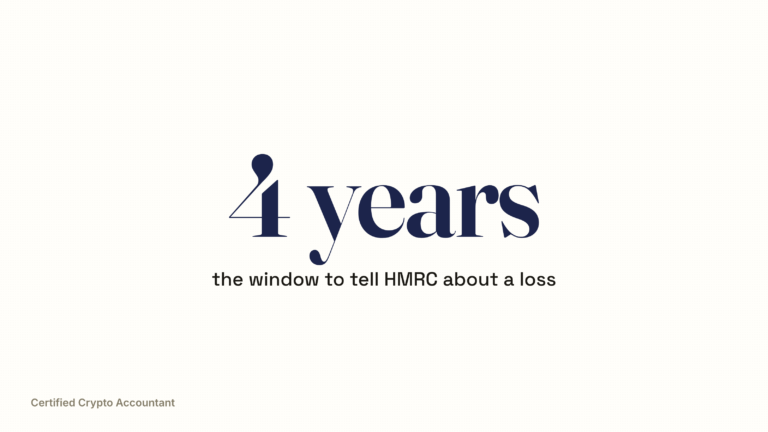
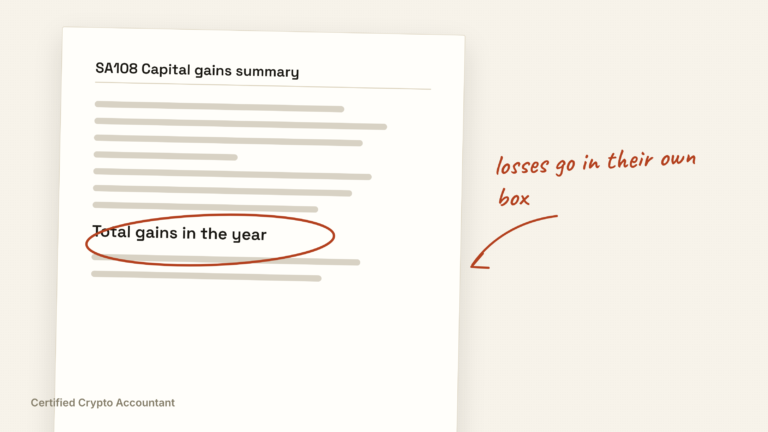
Two triggers. Gains above £3,000 after losses, and total proceeds above £50,000 in the year even where the gains sit inside the allowance, per GOV.UK’s reporting page. An account that rebalances a few times a year passes £50,000 of proceeds without noticing. Dividends and interest need reporting once they exceed the allowances. If one applies and you have never filed, registration is due by 5 October after the tax year and our registration guide covers it. A loss, including a currency loss, is only usable if claimed within four years of the end of the tax year, per GOV.UK.
Interactive Brokers keeps tax forms for the five most recent calendar years in Client Portal, per its tax forms page, and the Activity Statement can be run for any date range, including 6 April to 5 April, which the year-end forms cannot. Download the Activity Statement, the Dividend Report and the Forex Income Worksheet for each tax year and keep them, because the FIFO figures on the Annual Statement are the one thing on the platform HMRC will not accept as they stand.
Where the Annual Statement has used the wrong matching rule and the pooled figures need rebuilding before the return goes in, that is the work our capital gains tax accountant page describes.
Interactive Brokers questions
Does Interactive Brokers report to HMRC?
Not for shares, ETFs, bonds or options. The government decided in October 2024 not to extend automatic reporting to UK residents' own brokerage accounts. Crypto bought through the platform is reported under the Cryptoasset Reporting Framework from 1 January 2026, with the first reports due by 31 May 2027.
Does Interactive Brokers give a UK tax report?
It gives an Annual Statement, a Dividend Report and a Forex Income Worksheet, available under Reports in Client Portal. The Annual Statement matches sales First In, First Out, which HMRC does not use, so the gains on it have to be reworked under the same day, 30 day and section 104 pooling rules.
Why is Interactive Brokers asking for my tax identification number?
For the Common Reporting Standard and the US W-8BEN, which is how the 15% treaty rate on US dividends is secured. For a UK resident the number is the National Insurance number or UTR. Giving it does not mean your share trades are reported to HMRC, because UK residents' own accounts are outside automatic reporting.
Do I pay UK tax on US dividends in Interactive Brokers?
Yes. The dividend is taxable in the UK above the £500 allowance at 10.75%, 35.75% or 39.35%, and the 15% withheld in the US under your W-8BEN can usually be claimed as Foreign Tax Credit Relief on the return.
Is interest from Interactive Brokers taxable?
Yes. Interest paid on cash balances is savings income and counts against your personal savings allowance together with interest from every other account. Interactive Brokers pays nothing on the first £8,000 of sterling cash.
Do I pay tax in an Interactive Brokers ISA?
No. Gains, dividends and interest inside the Stocks and Shares ISA are free of tax and are not reported, within the £20,000 annual subscription limit. The account has to be funded in sterling.
Sources
Every figure on this page was checked against the source below on 16 October 2026.
- Cryptoasset Reporting Framework and Common Reporting Standard, summary of responses. HM Treasury and HM Revenue and Customs, checked 16 October 2026
- The Reporting Cryptoasset Service Providers (Due Diligence and Reporting Requirements) Regulations 2025. legislation.gov.uk, checked 16 October 2026
- CG51560, the same day and bed and breakfast identification rules. HM Revenue and Customs, checked 16 October 2026
- CG78300, foreign currency, introduction. HM Revenue and Customs, checked 16 October 2026
- CG78310, assets acquired or sold for foreign currency. HM Revenue and Customs, checked 16 October 2026
- CG78315, foreign currency, personal expenditure of individuals. HM Revenue and Customs, checked 16 October 2026
- TCGA 1992 section 252, foreign currency bank accounts. legislation.gov.uk, checked 16 October 2026
- Capital Gains Tax rates. GOV.UK, checked 16 October 2026
- Tax on dividends. GOV.UK, checked 16 October 2026
- Tax on foreign income, if you are taxed twice. GOV.UK, checked 16 October 2026
- Tax on savings interest. GOV.UK, checked 16 October 2026
- Capital Gains Tax, losses. GOV.UK, checked 16 October 2026
- Disclaimers, United Kingdom. Interactive Brokers (U.K.) Limited, checked 16 October 2026
- Tax information and reporting, year-end reports. Interactive Brokers, checked 16 October 2026
- Tax management tools and reporting. Interactive Brokers, checked 16 October 2026
- Non-US persons, initial application and data collection. Interactive Brokers, checked 16 October 2026
- Interest rates. Interactive Brokers (U.K.) Limited, checked 16 October 2026
- Stock Yield Enhancement Program. Interactive Brokers (U.K.) Limited, checked 16 October 2026
- Stocks and Shares ISA. Interactive Brokers (U.K.) Limited, checked 16 October 2026
- Interactive Brokers builds out cryptocurrency access, 14 July 2026. Interactive Brokers, checked 16 October 2026
- Tax forms. Interactive Brokers (U.K.) Limited, checked 16 October 2026

Fahad Zar
Crypto tax accountantAAT licensed 1010475
- AAT Licensed Accountant and MAAT, licence 1010475
- MSc Accounting and Finance, BPP University London
- Six years inside digital asset accounting, across several crypto tax firms
- Practises through Zar Enterprises Ltd, ICO registration ZC225094
- Supervised for anti-money laundering by the AAT
What matters to me is that the number on the return is true, whatever it turns out to be.
Whether this is worth a conversation
Where this stops being a reading job and starts being a hiring one.
- You have filed from the Annual Statement's FIFO figures for more than one year and nobody has reworked them under the pooling rules
- You hold dollar cash between trades and have never worked the currency side
- You lend shares through the programme, receive payments in lieu, and are not sure which box any of it belongs in
If everything sits inside the ISA and the ordinary account has never been opened, there is no return to make and nobody to pay.
If one of these is you, the first look costs nothing.
Read next
Trading 212 does not report your trades to HMRC and the pooling rules decide what you owe
The same pooling arithmetic on the platform most people start with.
Reviewed 16 October 2026ExplainerCapital gains tax on shares and the 30 day trap
The bed and breakfast rule in full, with the loss that vanished.
Reviewed 16 October 2026ExplainerDividend tax went up this April and most investors have not noticed
The 10.75% and 35.75% rates and how dividends stack on income.
Reviewed 16 October 2026ExplainerForex profits are taxed three ways in the UK and the product you traded decides which
Spot currency, CFDs and spread bets, and where each one lands.
Reviewed 16 October 2026