Trading 212 does not report your trades to HMRC and the pooling rules decide what you owe

Published 6 September 2026 Reviewed against gov.uk 5 September 2026 7 min readCapital gains tax
Trading 212 does not tell HMRC what you bought or sold in an Invest account, and it never has. The Common Reporting Standard, which makes UK brokers report accounts held by people who live abroad, was not extended to UK residents when the government considered it, a decision published on 30 October 2024. Crypto platforms got the opposite answer and report UK customers from 1 January 2026, but shares and ETFs in a general investment account stay off every automatic feed. What HMRC receives about your Trading 212 activity is whatever you put on a return, which is why the figure on the app’s Return line is where the trouble starts.
The app tells you what you made. HMRC asks what the pooled cost was on the day, and those are different questions with different answers.
Which account you used decides everything
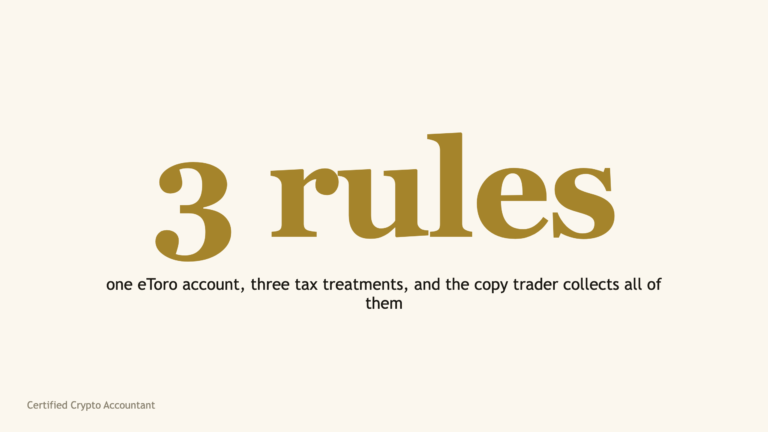
Trading 212 runs three products for UK customers and they are taxed three different ways. The Stocks and Shares ISA sits outside Capital Gains Tax and dividend tax entirely, up to £20,000 of subscriptions a year, and Trading 212 says in its own documents guide that it will not generate an annual or tax statement for an ISA because there is nothing to declare. The Invest account is a general investment account and everything in it is taxable above the allowances. The CFD account is taxed as a derivative, which in almost every case means capital gains rules under section 143, the treatment HMRC sets out at CG56100 and that our CFD guide covers in full.
| Account | What is taxed | Where it goes |
|---|---|---|
| Stocks and Shares ISA | Nothing | Nowhere, no return needed |
| Invest | Gains over £3,000, dividends over £500, interest on cash over your savings allowance | SA108 for gains, the main return for dividends and interest |
| CFD | Net gains and losses on closed positions | SA108, as a chargeable asset |
Interest on uninvested cash is the one people miss. Trading 212 treats it as interest income for UK tax purposes and leaves the reporting to you. It counts against the personal savings allowance alongside every other account you hold, £1,000 at basic rate and £500 at higher rate, per GOV.UK. A few thousand pounds parked in the app through a year of 4% rates produces interest that belongs on the return.
What you owe on Invest account gains
For 2026 to 2027 the annual exempt amount is £3,000. Gains above it are taxed at 18% where they fall inside your basic rate band and 24% above it, per GOV.UK. The band is worked out by stacking the gains on top of your income, so a pay rise in March can move a gain you made in May into the higher rate.
Dividends are separate. The first £500 is covered by the dividend allowance, and the rest is taxed at 10.75% at basic rate, 35.75% at higher rate and 39.35% at additional rate from 6 April 2026, per GOV.UK. US dividends arrive with American withholding already taken, at the treaty rate the W-8BEN form in the app secures, and that foreign tax can usually be credited against the UK charge rather than lost, per GOV.UK. Our dividend tax guide works the stacking through with figures.
The pooling rules the app does not apply
This is where the Return figure in the app and the figure HMRC wants part company. The app shows you a gain per position against what you paid for it. HMRC does not match sales to purchases that way. It uses the share identification rules at CG51560, in a fixed order. A sale is matched first against shares bought the same day. Then against shares bought in the 30 days after the sale. Then, and only then, against the section 104 pool, which is every share of that class you own at its average cost.
Take a holding built through three buys over a year, 100 shares at £10, 100 at £14 and 100 at £18. The pool holds 300 shares at £4,200, an average of £14. Sell 100 at £16 and an app that measures against the first purchase shows a £600 gain. HMRC’s figure is £200. Now sell those 100 shares at £16 and buy 100 back eleven days later at £15. The app shows a gain on the sale, while HMRC matches the sale to the repurchase under the 30 day rule, finds a £100 gain, and leaves the pool untouched. Sell at a loss and buy back within 30 days and the loss you thought you had banked disappears, which is the trap our shares guide was written around.
Fractional shares, reinvested dividends and the free share promotions all enter the pool at their sterling value on the day, and each reinvested dividend is an acquisition that can trigger the 30 day rule against a sale you made a fortnight earlier. A year of monthly investing produces twelve acquisitions per ETF, and the pooling has to be done for every one. In my experience this is the error that reverses most often when a Trading 212 return comes in for a second look.
Dollar shares are worked in pounds on two different days
Most of what people hold on Trading 212 is priced in dollars. HMRC’s rule at CG78310 is that the cost is the sterling equivalent of the dollars paid at the exchange rate on the day you bought, and the proceeds are the sterling value on the day you sold. You cannot work the gain in dollars and convert the answer, and HMRC says so in that paragraph. A share that went nowhere in dollars while the pound fell 8% has a sterling gain, and the reverse produces a loss you can claim. The app’s FX impact line is a hint that this is happening, and it is a hint only.
The records the app gives you and the ones it does not
Trading 212 provides an annual statement covering a full tax year, a transaction statement and a CSV export of orders, dividends and transactions, all from the Documents menu in the app. Two limits matter. A statement for the current tax year can only be generated once the account is closed, so the full year’s evidence arrives after 5 April, and no annual or tax statement exists for the ISA at all. Export the CSV at the end of every tax year and keep it, because the app’s history is the only record of your cost that exists. HMRC expects you to keep the records behind a return for at least 22 months after the end of the tax year, per GOV.UK, and longer if you filed late.
When you have to report at all
Two triggers. Gains above £3,000 after losses, and total proceeds above £50,000 in the year even if the gains sit inside the allowance, a rule GOV.UK sets out on its reporting page. An active Invest account passes £50,000 of proceeds on churn alone. Dividends need reporting once they exceed both the £500 allowance and any unused personal allowance. If neither applies and you have never filed, there is nothing to send. If one does, the deadline is 31 January after the tax year, and our Self Assessment registration guide covers the 5 October step for a first year.
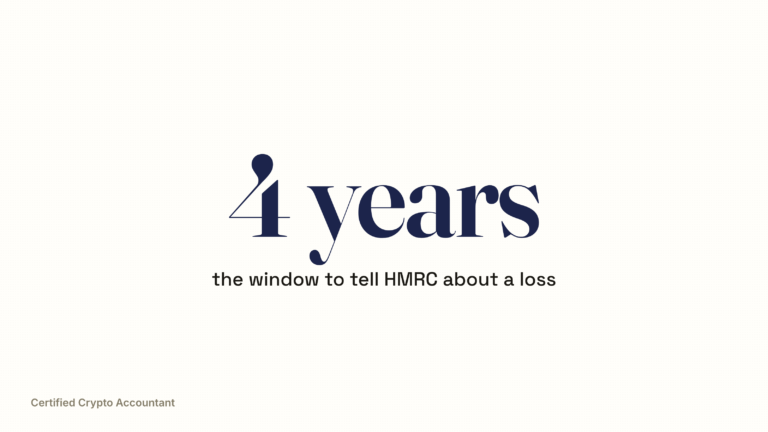
Losses deserve a line of their own. A loss on Trading 212 is only usable if it is claimed within four years of the end of the tax year it arose in, per GOV.UK, and many people with a losing year never file because they assume there is nothing to pay. There is nothing to pay. There is a loss to bank against the year that goes right.
Trading 212 questions
Does Trading 212 report to HMRC?
No. Trading 212 does not send your Invest or CFD trades to HMRC, and the government decided in October 2024 not to extend automatic reporting to UK residents' own brokerage accounts. You report your gains, dividends and interest yourself.
Do I pay tax on a Trading 212 ISA?
No. Gains, dividends and interest inside a Stocks and Shares ISA are free of tax and are not reported, within the £20,000 annual subscription limit.
How much tax do I pay on Trading 212 gains?
Gains above the £3,000 annual exempt amount are taxed at 18% in the basic rate band and 24% above it for 2026 to 2027. The band depends on your gains stacked on top of your income.
Does Trading 212 give a tax statement?
It provides an annual statement for completed tax years and a CSV export of orders and dividends. The current year's statement is only available once the account is closed, and no statement is produced for an ISA.
Do I need to declare Trading 212 if I made a loss?
Only if you want to use the loss. A claimed loss reduces gains in the same year and carries forward, and the claim has to be made within four years of the end of the tax year.
Sources
Every figure on this page was checked against the source below on 5 September 2026.
- Cryptoasset Reporting Framework and Common Reporting Standard, summary of responses. HM Treasury and HM Revenue and Customs, checked 5 September 2026
- CG51560, the same day and bed and breakfast identification rules. HM Revenue and Customs, checked 5 September 2026
- CG78310, assets acquired or sold for foreign currency. HM Revenue and Customs, checked 5 September 2026
- Capital Gains Tax rates. GOV.UK, checked 5 September 2026
- Tax on dividends. GOV.UK, checked 5 September 2026
- Tax on savings interest. GOV.UK, checked 5 September 2026
- What documents can I get from Trading 212. Trading 212, checked 5 September 2026
- Tax on interest income for UK tax residents. Trading 212, checked 5 September 2026
- Keeping your pay and tax records. GOV.UK, checked 5 September 2026
Fahad Zar
Crypto tax accountantAAT licensed 1010475
- AAT Licensed Accountant and MAAT, licence 1010475
- MSc Accounting and Finance, BPP University London
- Six years inside digital asset accounting, across several crypto tax firms
- Practises through Zar Enterprises Ltd, ICO registration ZC225094
- Supervised for anti-money laundering by the AAT
What matters to me is that the number on the return is true, whatever it turns out to be.
Whether this is worth a conversation
Where this stops being a reading job and starts being a hiring one.
- You have a few years of Invest account history, sold and bought back inside 30 days, and have never applied the pooling
- Your dollar holdings show a small return in the app and you suspect the sterling figure is different
- You hold crypto as well as shares and want both sets of pooling done by one person
If everything sits inside the ISA and the Invest account has never been opened, there is no return to make and nobody to pay.
If one of these is you, the first look costs nothing.
Read next
Capital gains tax on shares and the 30 day trap
The bed and breakfast rule in full, with the loss that vanished.
Reviewed 5 September 2026ExplainerDividend tax went up this April and most investors have not noticed
The 10.75% and 35.75% rates and how dividends stack on income.
Reviewed 5 September 2026ExplainerYour capital gains tax allowance for 2026 to 2027
The £3,000 exemption and who else in the household has one.
Reviewed 5 September 2026ExplainerCFD profits are taxable and spread betting is not
The CFD account, taxed as a derivative under CG56100.
Reviewed 5 September 2026