Forex profits are taxed three ways in the UK and the product you traded decides which

Published 10 September 2026 Reviewed against gov.uk 5 September 2026 7 min readCrypto income and business
Forex profits in the UK are taxed as nothing, as capital gains, or as trading income, and which of the three applies depends far more on the product you used than on how much you made. A spread bet on the pound is exempt. A contract for difference or a rolling spot position is a capital gain. Only where HMRC can show that your dealing amounts to a trade, which its own Statement of Practice says is unlikely for a private individual, does income tax come in. Every figure below was checked against legislation.gov.uk and HMRC’s manuals on 5 September 2026.
The broker’s product page decides your tax before your first trade does. Spread bet and you are outside the system, CFD and you are a capital gains investor, and only HMRC can make you a trader.
Spread betting pays nothing and claims nothing
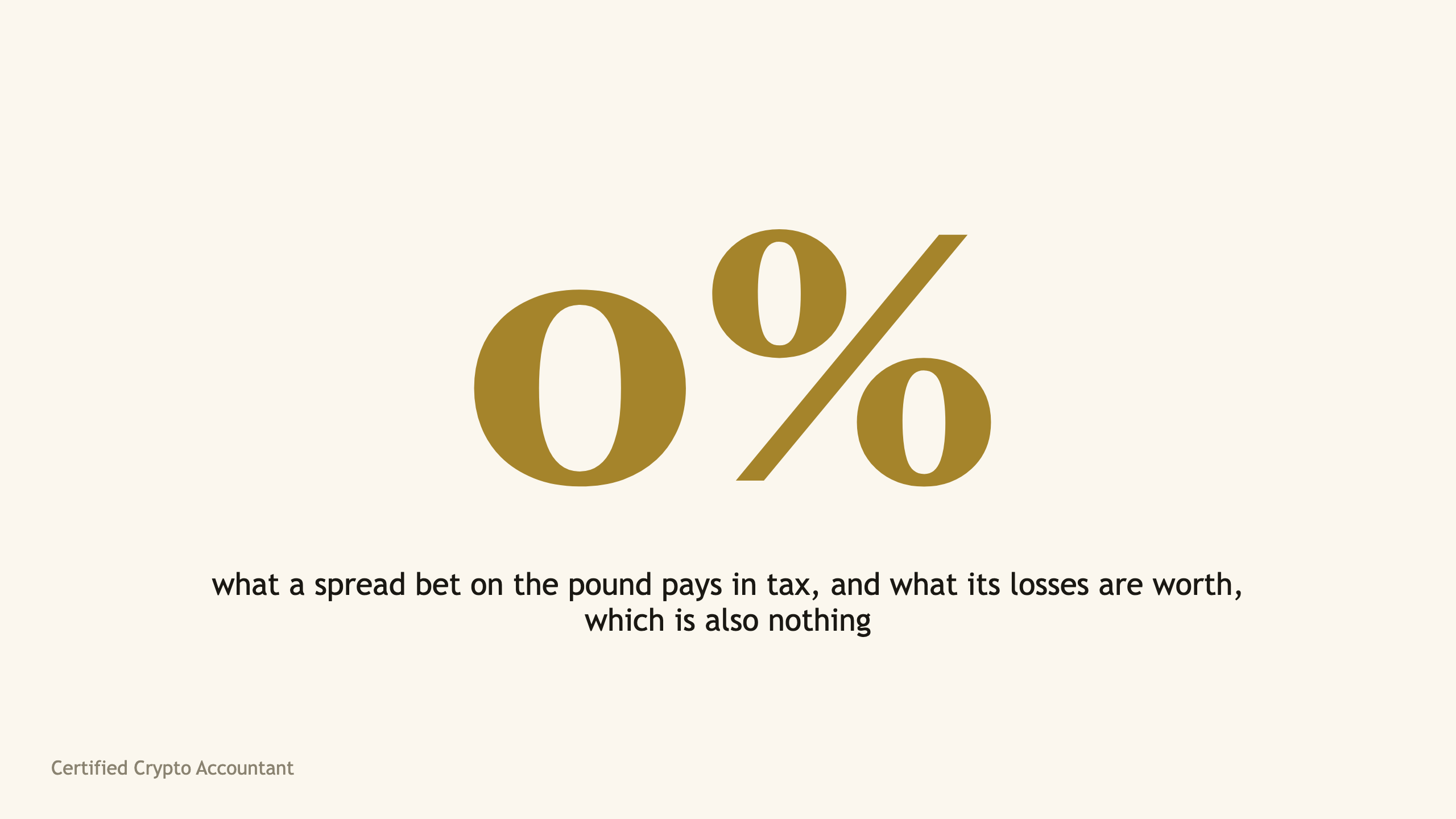
Section 51(1) of the Taxation of Chargeable Gains Act 1992 says winnings from betting are not chargeable gains, and disposing of the right to such winnings creates neither a gain nor an allowable loss. HMRC’s Business Income Manual at BIM22020 applies the principles of the old gambling cases equally to spread betting, and at BIM22017 it adds that having a system, or being successful enough to live on the winnings, does not turn gambling into a trade.
The price of that exemption is symmetry. A losing year on a spread betting account produces nothing you can set against anything. Brokers advertise the tax free side and say less about the other, and for a retail trader whose results swing both ways the CFD account, with its claimable losses, can leave more in your pocket than the spread bet does. The BIM22020 caveat is worth knowing too. Where a spread bet is placed as part of an existing trade, for instance a business hedging a currency exposure, the wins can be taxed because they arise from the trade rather than from the bet. That is rare for individuals.
CFDs and rolling spot forex are capital gains
Most retail forex in the UK is traded through contracts for difference or rolling spot contracts, where no currency is ever delivered and the broker settles the price difference. HMRC’s manual at CG56100 treats retail contracts for difference as financial futures and says that, unless the profits are taxable as trading income, in almost every case section 143 charges the outcome under the capital gains regime. Every debit and credit on the position, the overnight financing, the commissions and the swap charges, goes into one computation when the contract closes.
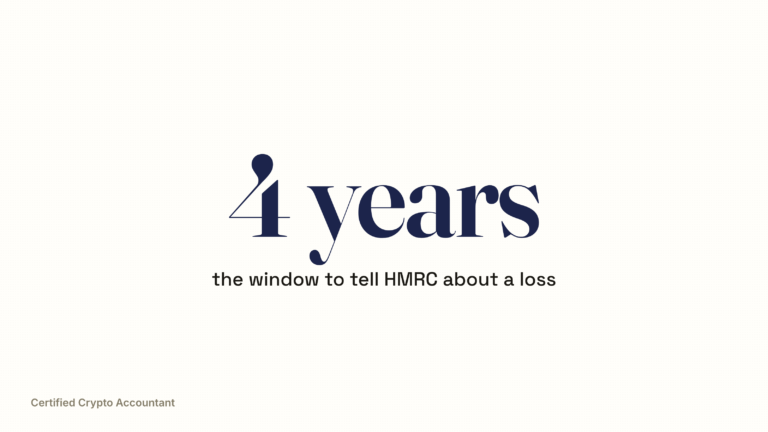
For 2026 to 2027 that means the first £3,000 of gains across everything you dispose of is exempt, and the rest is taxed at 18% inside your basic rate band and 24% above it, per GOV.UK. Losses are allowable losses, usable against gains on shares, crypto or property in the same year and carried forward, provided they are claimed within four years of the end of the tax year, per GOV.UK. Our CFD guide sets out the computation with figures, and the treatment is the same whether the underlying is a currency pair, an index or a share.
| Product | Tax on profits | Losses | Where HMRC says so |
|---|---|---|---|
| Spread bet | None | No relief | TCGA 1992 section 51, BIM22020 |
| CFD or rolling spot | Capital gains, 18% or 24% above £3,000 | Allowable against gains | TCGA 1992 section 143, CG56100 |
| Genuine trade | Income tax at your marginal rate | Trading losses, against other income | SP3/02, BIM56880 |
| Holding the currency itself | Capital gains on disposal | Allowable | CG78300, with the section 252 and 269 exceptions |
When forex becomes a trade
People assume that trading every day makes them a trader for tax. HMRC’s position is the opposite. Its Statement of Practice 3/02, which still stands, says that whether a taxpayer is trading is a question of fact and degree, and that an individual is unlikely to be regarded as trading as a result of purely speculative transactions in financial futures or options. The Business Income Manual at BIM56880 says the question for derivatives is approached exactly as it is for someone claiming to trade in shares, and HMRC’s own guidance on share dealers warns that volume of transactions carries little weight. Our guide to the badges of trade works through the tests.
Two consequences follow. First, a retail forex trader almost never gets income tax treatment by choice, and the people who want it are usually those with a losing year hoping to set the loss against a salary. HMRC will resist, and the Statement of Practice is on its side. Second, the £1,000 trading allowance on GOV.UK is irrelevant to capital gains, so it does nothing for a CFD account, whatever a forum says. I think the capital treatment is the right one for almost every retail account and, with the £3,000 exemption and the lower rates, usually the cheaper one too.
Holding the currency itself
Actual foreign currency is a chargeable asset. HMRC’s manual at CG78300 says currency other than sterling is a chargeable asset and its disposal can give rise to a chargeable gain or an allowable loss. Two exceptions carry most people. Money in a foreign currency bank account is exempt for individuals under section 252, a rule in force since 2012, and currency acquired for personal spending abroad is outside the charge under section 269. Physical dollars bought and sold as an investment, or currency held on a platform that is not a bank, sit inside the charge, and the gain is worked in sterling at the rate on each day, the same rule that applies to shares bought in dollars.
The crypto overlap
Forex traders often trade crypto on the same platform, and the same three way split applies with one difference. Since 6 January 2021 the FCA has banned the sale of crypto derivatives to retail clients, so a UK retail account cannot hold a bitcoin CFD, and crypto on a regulated platform is the coin itself, taxed as a chargeable asset with pooling. Our guide to margin and futures on crypto covers what that ban did to the products, and the trader question is answered the same way as for forex. A person who is a capital gains investor in EURUSD is a capital gains investor in ETH.
Reporting a forex year
A CFD or rolling spot account is reported on the capital gains pages of a Self Assessment return. You need to report where gains exceed £3,000 after losses, or where total proceeds in the year exceed £50,000 even when the gains sit inside the exemption, per GOV.UK, and a forex account clears £50,000 of proceeds on volume alone. The broker’s annual statement gives you the closed positions. It does not give you the sterling conversion on each day, and a dollar denominated account has to be worked in pounds at the rate on the date of each closing, per CG78310. A loss on the account in dollars can be a gain in sterling, and the reverse. The same arithmetic our Trading 212 guide walks through applies to every dollar account.
Forex tax questions
Is forex trading tax free in the UK?
Only through spread betting, where winnings are not chargeable gains under section 51 of the Taxation of Chargeable Gains Act 1992. CFDs and rolling spot forex are taxed as capital gains, and a genuine trade is taxed as income.
Do I pay capital gains tax on forex?
Yes if you trade through CFDs or rolling spot contracts. HMRC treats them as financial futures under section 143, taxed at 18% or 24% on gains above the £3,000 annual exempt amount, with losses claimable.
Do forex traders pay income tax?
Rarely. HMRC's Statement of Practice 3/02 says an individual is unlikely to be trading through purely speculative transactions in financial futures or options, so income tax applies only where the activity is a genuine trade on all the facts.
Can I claim forex losses against tax?
Losses on CFDs and rolling spot contracts are allowable capital losses, usable against gains in the same year and carried forward if claimed within four years. Spread betting losses cannot be claimed against anything.
Is spread betting really tax free?
Yes for individuals betting on their own account. It stops being tax free where the bet is placed as part of an existing trade, which HMRC's manual at BIM22020 describes and which rarely applies to private traders.
Sources
Every figure on this page was checked against the source below on 5 September 2026.
- Taxation of Chargeable Gains Act 1992, section 51, exemption for winnings. legislation.gov.uk, checked 5 September 2026
- BIM22020, betting and gambling, spread betting. HM Revenue and Customs, checked 5 September 2026
- BIM22017, betting and gambling, the professional gambler. HM Revenue and Customs, checked 5 September 2026
- CG56100, contracts for differences. HM Revenue and Customs, checked 5 September 2026
- Taxation of Chargeable Gains Act 1992, section 143, commodity and financial futures. legislation.gov.uk, checked 5 September 2026
- Statement of Practice 3 (2002), transactions in financial futures and options. HM Revenue and Customs, checked 5 September 2026
- BIM56880, financial traders, derivative contracts. HM Revenue and Customs, checked 5 September 2026
- CG78300, foreign currency, introduction. HM Revenue and Customs, checked 5 September 2026
- Taxation of Chargeable Gains Act 1992, section 252, foreign currency bank accounts. legislation.gov.uk, checked 5 September 2026
- Capital Gains Tax rates. GOV.UK, checked 5 September 2026
Fahad Zar
Crypto tax accountantAAT licensed 1010475
- AAT Licensed Accountant and MAAT, licence 1010475
- MSc Accounting and Finance, BPP University London
- Six years inside digital asset accounting, across several crypto tax firms
- Practises through Zar Enterprises Ltd, ICO registration ZC225094
- Supervised for anti-money laundering by the AAT
What matters to me is that the number on the return is true, whatever it turns out to be.
Whether this is worth a conversation
Where this stops being a reading job and starts being a hiring one.
- You run CFD and crypto accounts side by side and want one set of pooled figures across both
- A losing year on CFDs never went on a return and the four year claim window is closing
- A broker or a forum has told you that you are a trader for income tax and you are not sure that helps you
If every position was a spread bet on your own account, there is nothing to declare and nothing to claim, and no accountant can change either.
If one of these is you, the first look costs nothing.
Read next
CFD profits are taxable and spread betting is not
The computation under CG56100 with figures, and the stamp duty point.
Reviewed 5 September 2026ExplainerThe badges of trade decide if HMRC calls you a trader
The tests HMRC applies before income tax treatment is available.
Reviewed 5 September 2026Deep guideCrypto Margin, Futures and Leverage Tax UK Explained
What the FCA ban left available to UK retail, and how it is taxed.
Reviewed 5 September 2026DeadlineUnclaimed capital losses expire after four years
Why the losing CFD year still needs a return.
Reviewed 5 September 2026