How to report crypto to HMRC
The SA108 crypto boxes, the real time service, the £3,000 and £50,000 thresholds and the deadline that lands three months before filing day.

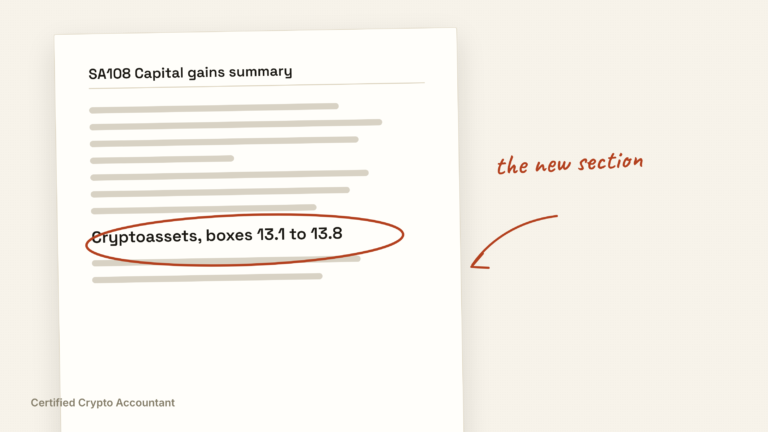
The SA108 crypto boxes, the real time service, the £3,000 and £50,000 thresholds and the deadline that lands three months before filing day.
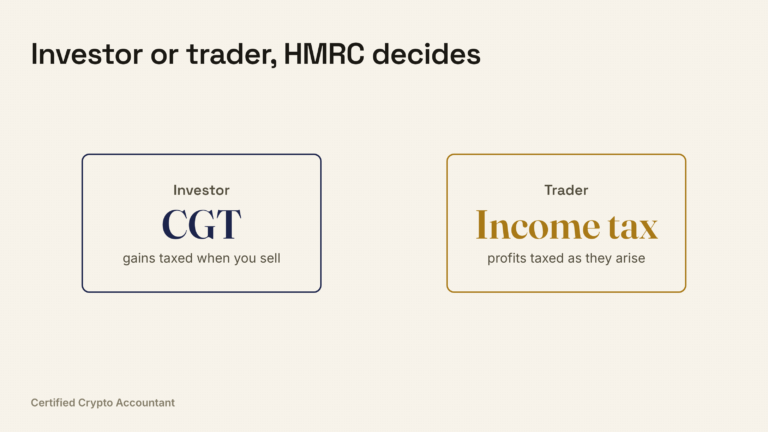
Nine tests decide whether you pay capital gains tax or income tax on your profits. What they are, and why crypto day traders almost never count as traders.
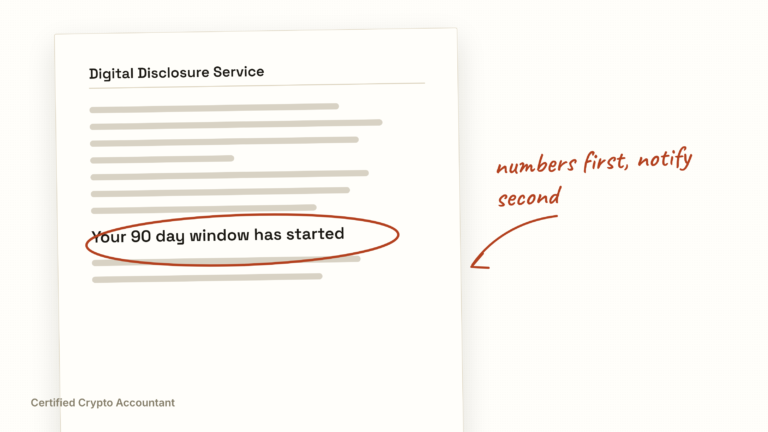
Notify, then 90 days to disclose and pay. How the DDS works, how far back you go by behaviour, and why unprompted beats prompted on every line of the penalty table.
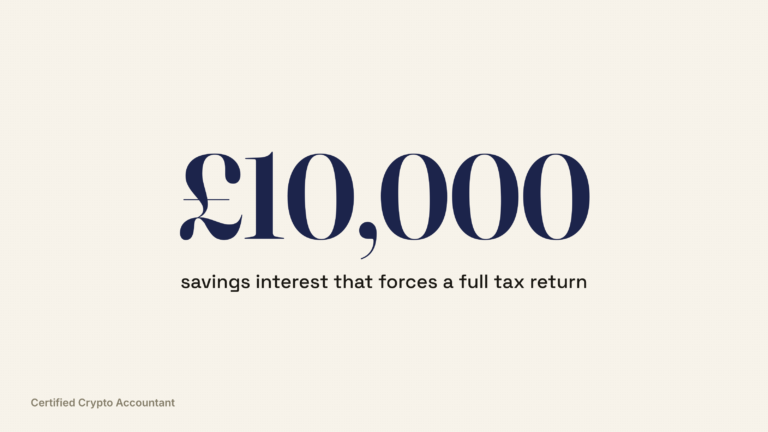
Banks report interest automatically and rising rates pushed ordinary savers over the £1,000 allowance. What the letters and tax code changes mean and what to check.
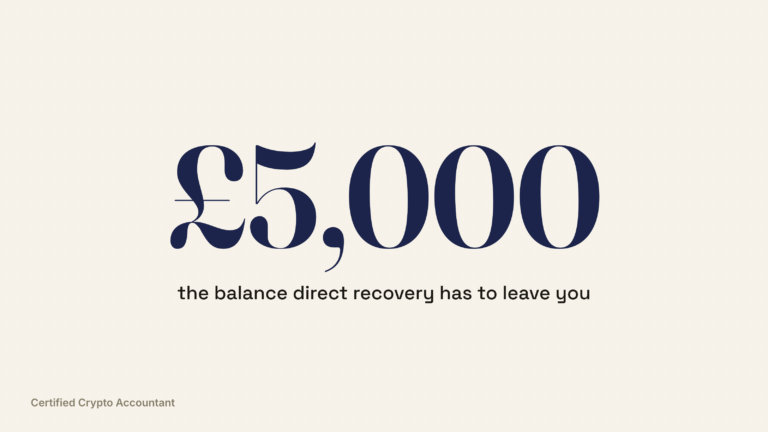
Direct Recovery of Debts lets HMRC take established debts over £1,000 from bank accounts and cash ISAs, after a face to face visit and with £5,000 always left. Who is actually at risk.
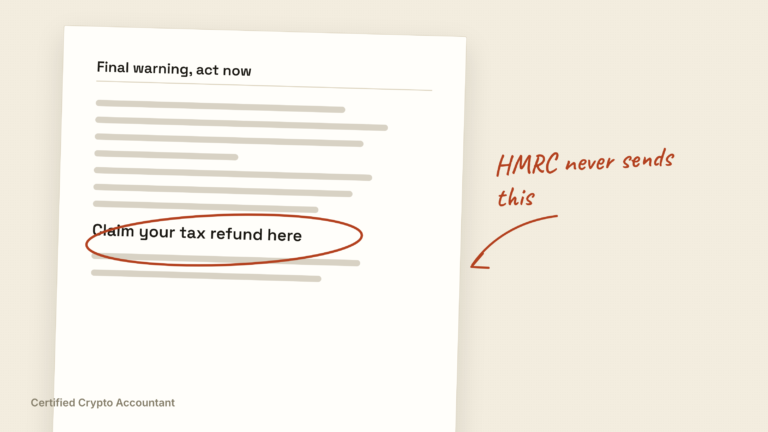
HMRC never threatens arrest and never asks for bank details to pay a refund. The thirty second sorting method, and where to forward the fakes.

Banks report your interest automatically, platforms and exchanges report activity, and Schedule 36 notices can demand statements. What HMRC sees, what it can demand, and what triggers a look.
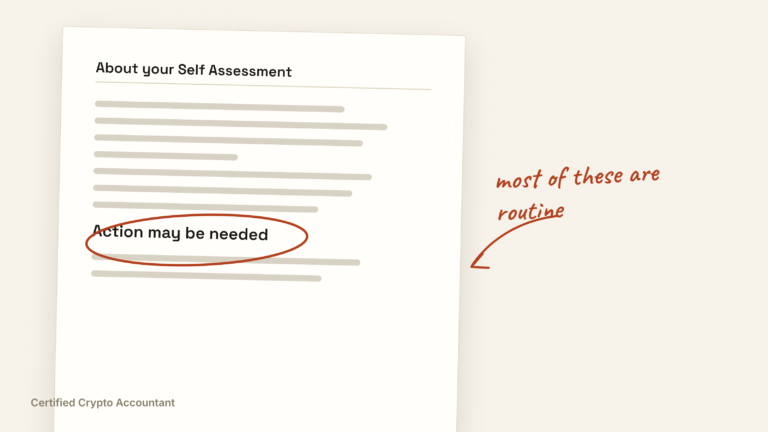
Most HMRC letters are routine and a few are not. How to tell tax codes and calculations apart from nudge letters and compliance checks, and what to do in the first week.
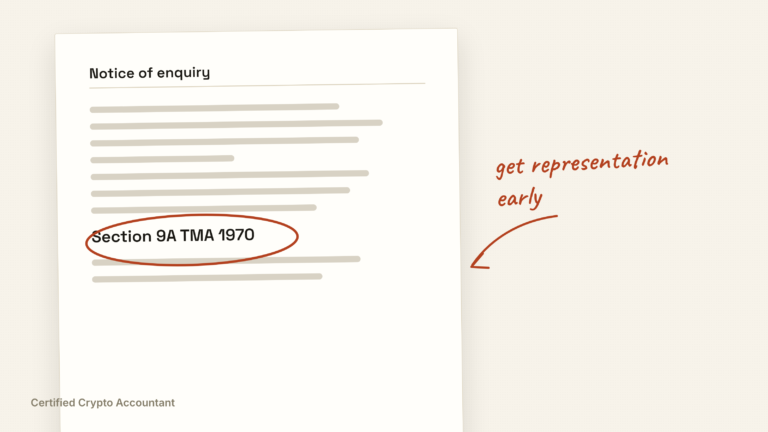
How an HMRC crypto enquiry differs from a nudge letter, with section 9A, discovery assessments, COP8 and COP9, timelines and penalties.

Does Revolut report to HMRC? What Revolut shares, what CARF changes from 2026, and why your crypto disposals on Revolut are still taxable.