The HMRC savings tax warning is about your bank interest

Published 4 August 2026· Reviewed against gov.uk 25 August 2026· 4 min read·HMRC and compliance
£1,000. That is the whole story behind the “HMRC savings tax warning” headlines, and it has not changed in a decade while interest rates and savings balances both have. A basic rate taxpayer can earn £1,000 of interest tax free each year. Higher rate, £500. Additional rate, nothing. Interest rates rose, balances grew, and a threshold that once required serious money to breach now catches people with an ordinary rainy day fund in a decent account.
The “warning” is not a new tax and not a crackdown. It is arithmetic reaching people who did not know the rule existed.
How HMRC already knows your interest
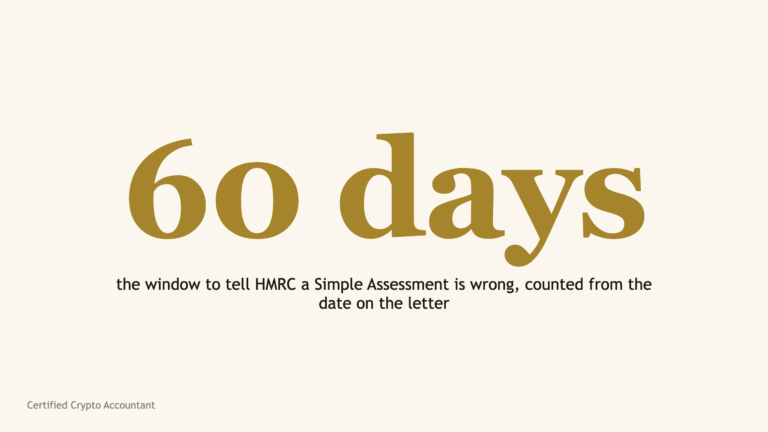
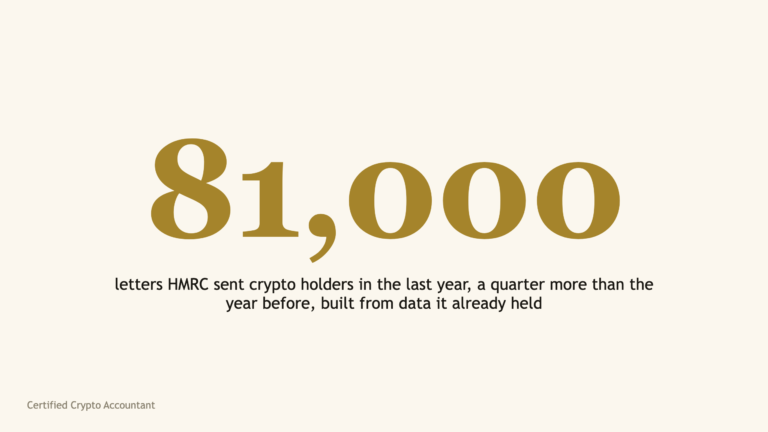
You do not report your bank interest, your bank does. At the end of each tax year, banks and building societies tell HMRC the interest they paid every customer, per the process on GOV.UK. HMRC adds it up across your accounts, sets it against your Personal Savings Allowance, and if tax is due, collects it. For employed people and pensioners that usually means a changed tax code, the tax dribbling out of your pay through the year. For others it arrives as a simple assessment letter asking for payment directly.
That mechanism explains the two experiences people are searching about. Take-home pay dipped without explanation, that is the code adjustment. A bill arrived for tax on interest you never mentioned to anyone, that is the reporting. Neither one means anything went wrong.
The numbers worth knowing
The Personal Savings Allowance runs £1,000 for basic rate taxpayers, £500 for higher rate, zero for additional rate. Below your allowance, nothing happens. Above it, the excess is taxed at your normal income tax rate.
Lower earners have an extra layer most articles skip. If your other income is under £17,570, the starting rate for savings can shelter up to £5,000 of interest on top of the allowances, tapering away as income rises. Pensioners with modest pensions and meaningful savings are the classic winners here, and some of them are paying tax a phone call would remove.
ISA interest counts toward none of this. It is not reported against your allowance and never becomes taxable, which is the boring, effective answer for anyone bumping against the threshold year after year. Premium Bond prizes are likewise outside the system entirely.
What to check when the letter or new code lands
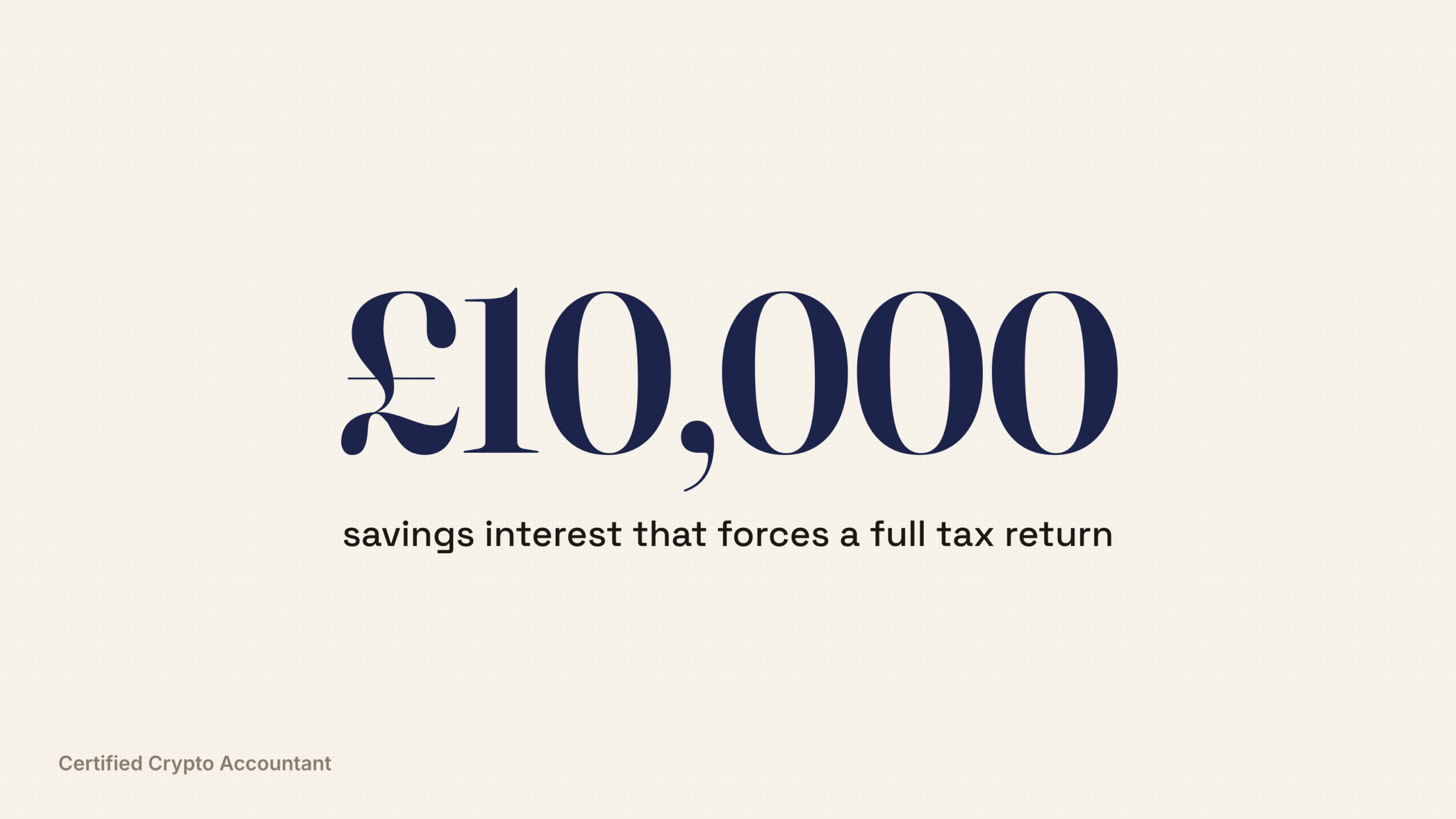
Do not pay it reflexively, and do not ignore it. Check three things. First, the interest figure itself against your own statements, because accounts get matched to the wrong person more often than you would hope, especially after switching. Second, the rate band HMRC has assumed for you, since the difference between a £1,000 and £500 allowance is real money. Third, whether the interest pushed you over a threshold with knock-on effects, £10,000 of savings and investment income is the point where Self Assessment enters the picture, and it can also interact with things like the High Income Child Benefit Charge.
If the figures are right, the collection method is usually painless and there is nothing to do. If they are wrong, dispute the calculation rather than paying and hoping, because this year’s error becomes next year’s assumption. The wider pattern of what your bank tells HMRC sits alongside everything else in the data feeds, which we mapped in can HMRC see my bank account.
Common questions
Is this a new tax on savings?
No. Interest has been taxable above the allowance since the allowance was introduced. What changed is interest rates, which turned a threshold few people met into one that ordinary savers cross without noticing.
Do I need to file a tax return because of savings interest?
Usually not. HMRC collects through your tax code or a simple assessment using the bank-reported figures. Self Assessment becomes relevant around £10,000 of savings and investment income, or if you file already for other reasons, in which case interest goes on the return.
How do I avoid tax on savings interest legally?
ISAs, in a word. Interest inside an ISA never touches the allowance. Couples can also move savings to whichever partner has the lower rate band or unused allowance, which is unglamorous and entirely effective.
What if the interest figure HMRC used is wrong?
Challenge the calculation with your own statements before paying. Errors happen at the matching stage, and a wrong figure accepted once tends to repeat.
If a savings letter arrived alongside anything else, gains, side income, crypto, the pieces interact, and that is where a proper look pays for itself. Our free review covers the whole picture rather than one letter.
Sources
Every figure on this page was checked against the source below on 25 August 2026.
- The process on GOV.UK. GOV.UK, checked 25 August 2026
- Changed tax code. GOV.UK, checked 25 August 2026
- ISA interest. GOV.UK, checked 25 August 2026
- Self Assessment. GOV.UK, checked 25 August 2026
Fahad Zar
Crypto tax accountantAAT licensed 1010475
- AAT Licensed Accountant and MAAT, licence 1010475
- MSc Accounting and Finance, BPP University London
- Six years inside digital asset accounting, across several crypto tax firms
- Practises through Zar Enterprises Ltd, ICO registration ZC225094
- Supervised for anti-money laundering by the AAT
What matters to me is that the number on the return is true, whatever it turns out to be.
Whether this is worth a conversation
Most people who read this page do not need an accountant. A few do.
- A letter from HMRC has arrived
- You have years HMRC does not know about
- HMRC's figures do not match yours
If your letter is a routine tax code notice and your filings are current, you probably just needed this page.
If one of these is you, the first look costs nothing.
Read next
Crypto tax deadlines for the 2026 to 2027 tax year
Key UK crypto tax dates for 2025/26: Self Assessment registration, the 31 January filing and payment deadline, and what…
Reviewed 25 Aug 2026Deep guideHow much HMRC can charge for unpaid crypto tax
What HMRC crypto tax penalties actually cost: late filing, late payment and undeclared gains. How penalties are…
Reviewed 25 Aug 2026ExplainerHow to tell a real HMRC letter from a scam
HMRC never threatens arrest and never asks for bank details to pay a refund. The thirty second sorting method, and…
Reviewed 25 Aug 2026ExplainerA letter from HMRC is rarely as bad as it looks
Most HMRC letters are routine and a few are not. How to tell tax codes and calculations apart from nudge letters and…
Reviewed 25 Aug 2026 ExplainerA Simple Assessment letter is HMRC's bill for tax it already knows about
The PA302 that collects the interest tax, and the 60 days you have to query it.
Reviewed 5 September 2026