How to report capital gains on your Self Assessment

Published 9 August 2026· Reviewed against gov.uk 25 August 2026· 4 min read·Capital gains tax
Capital gains go on their own section of the tax return, the SA108, and whether you need to fill it in at all follows two tests. Gains above the £3,000 allowance, obviously. Less obviously, total sale proceeds above £50,000, even when the gains underneath are small or nil, per the reporting rules. Either test alone puts capital gains on your return.
Here is how the reporting actually works, and where people get caught.
The SA108 and what goes on it
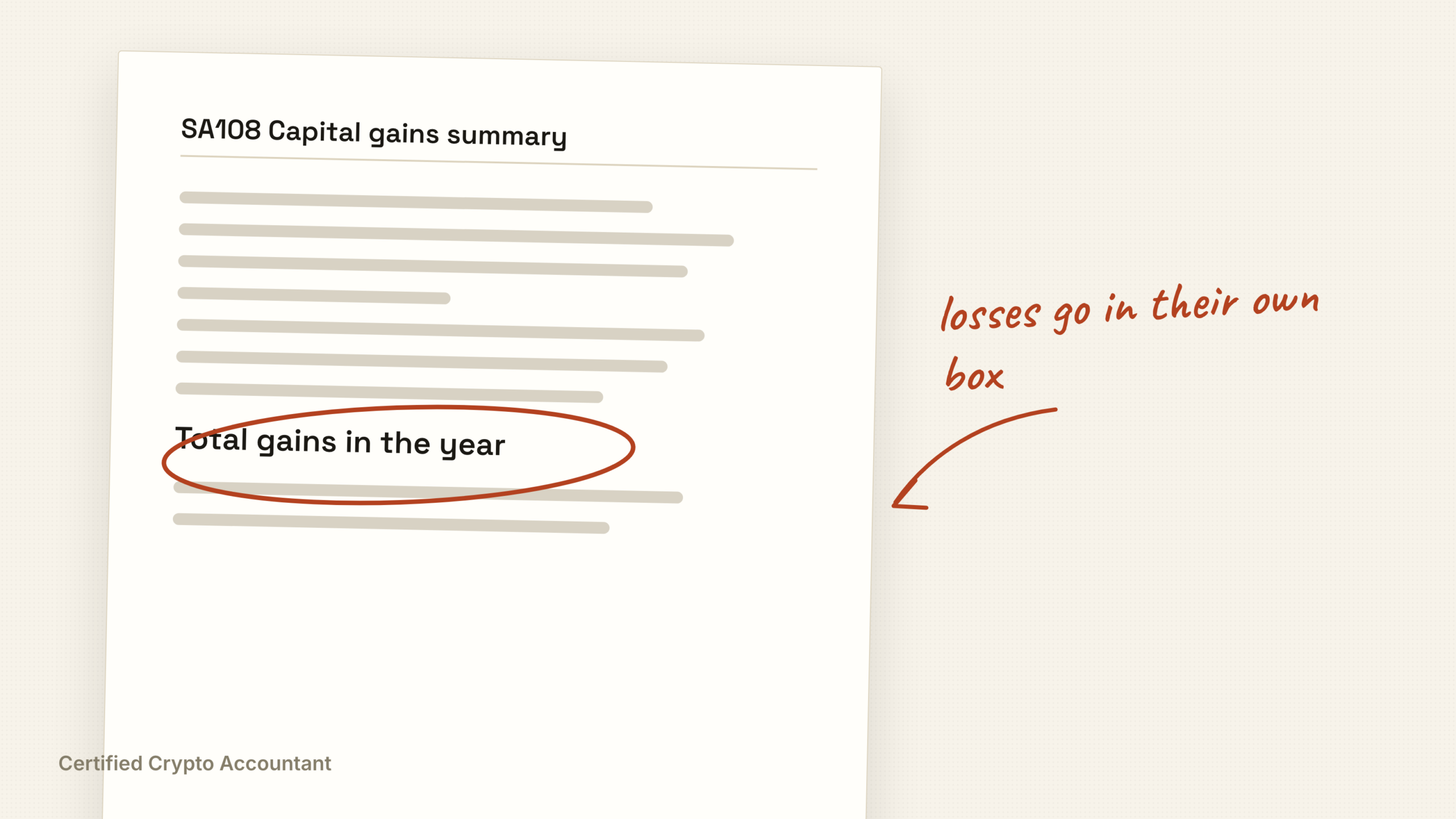
The capital gains summary pages want your disposals grouped by type, listed shares in one section, property in another, other assets, which includes crypto, in their own. For each group you report numbers of disposals, total proceeds, total costs, gains and losses. Behind those summary boxes sits the expectation of computations, your working for each disposal, which you attach or hold ready. The summary is easy. The computations are where the year of your financial life gets reconstructed, and they are what HMRC asks for when it checks.
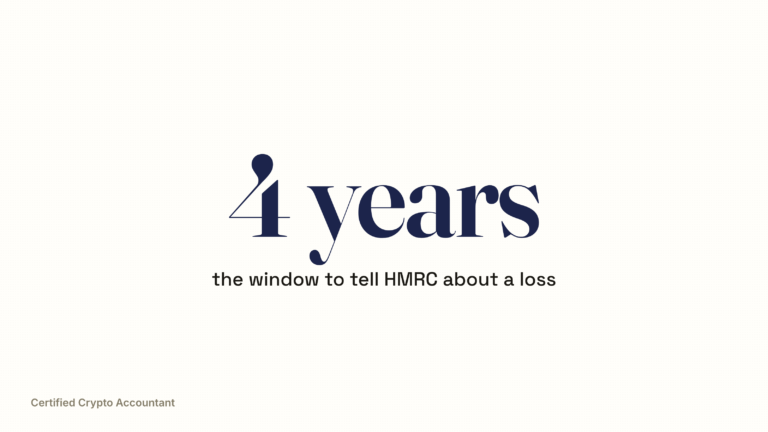
Losses go here too, and this matters more than it looks. A loss only becomes usable once it is claimed, and the return is the normal place to claim it. Skip reporting in a loss year because “there was no tax to pay” and you have failed to bank the one valuable thing that year produced. The four year window and the mechanics get their own treatment in tomorrow’s companion piece on losses.
What does not go through the return
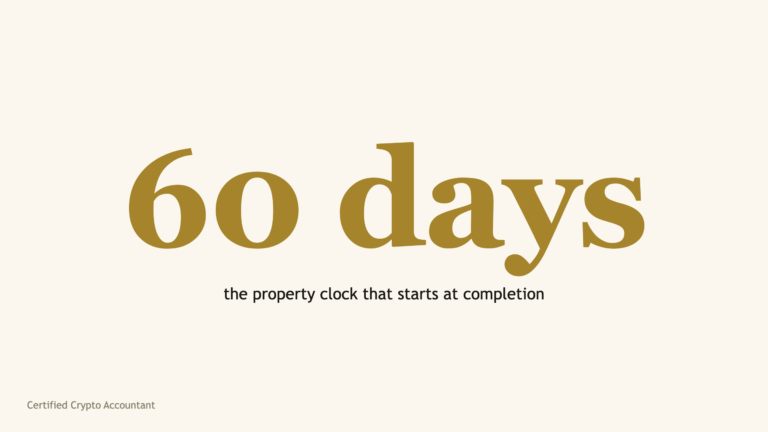
UK residential property gains run on their own track. Tax due on a second home or rental sale must be reported and paid within 60 days of completion through HMRC’s property service, months before any tax return would be due. The disposal then appears on your SA108 as well, with the tax already paid credited against the year. The 60 day deadline catches people precisely because they assumed the return covered it.
There is also a standalone reporting route for people not otherwise in Self Assessment, HMRC’s real time capital gains service, which lets you report a gain without joining the annual return cycle. Useful for the one-off disposal in an otherwise PAYE life.
The paperwork that decides enquiries
Every number on an SA108 is a claim about acquisition cost, and acquisition cost is where the whole edifice rests. Contract notes, completion statements, exchange records, the paper trail from when you bought. HMRC’s guidance on what records to keep is not bureaucratic filler, it is the difference between an enquiry that closes in a letter and one that runs a year. For shares the broker usually holds the history. For crypto, the history is scattered across platforms that may no longer exist, which is why the computation work dwarfs the filing work and why software-generated figures need checking before they become sworn statements on a return.
Filing itself follows the normal Self Assessment calendar, online by 31 January with payment. If you are new to the system, registration comes first, by 5 October, which we covered in how to register for Self Assessment.
Reporting questions
My gains were under £3,000. Do I report at all?
If you are in Self Assessment and proceeds passed £50,000, yes, tax-free or not. Outside Self Assessment with gains under the allowance and no property involved, generally no.
Where does crypto go on the SA108?
The other property, assets and gains section, not listed shares. Each swap, sale and spend is a disposal, aggregated into the summary boxes with computations behind them.
I already paid property tax within 60 days. Why report again?
The 60 day payment is an on-account process. The disposal still belongs on your annual return, where the year’s full picture, other gains, losses, allowance, settles the final figure and credits what you paid.
Can I amend a return I got wrong?
Within twelve months of the filing deadline, yes, directly. Older than that, the disclosure route takes over, which we walked through in the Digital Disclosure Service guide.
If this year’s SA108 involves reconstructing anything, a crypto history, a lost purchase record, an inherited holding, start earlier than feels necessary. Checking a computation is quick. Building one is not. Both are things our free review can scope for you.
Sources
Every figure on this page was checked against the source below on 25 August 2026.
- The reporting rules. GOV.UK, checked 25 August 2026
- Capital gains summary pages. GOV.UK, checked 25 August 2026
- Only becomes usable once it is claimed. GOV.UK, checked 25 August 2026
- Reported and paid within 60 days of completion. GOV.UK, checked 25 August 2026
Fahad Zar
Crypto tax accountantAAT licensed 1010475
- AAT Licensed Accountant and MAAT, licence 1010475
- MSc Accounting and Finance, BPP University London
- Six years inside digital asset accounting, across several crypto tax firms
- Practises through Zar Enterprises Ltd, ICO registration ZC225094
- Supervised for anti-money laundering by the AAT
What matters to me is that the number on the return is true, whatever it turns out to be.
Whether this is worth a conversation
Most people who read this page do not need an accountant. A few do.
- Your gains are near the £3,000 line
- You have swapped tokens and doubt the numbers
- You have old losses nobody ever claimed
If you sold one holding once and the figures are plain, file it yourself. Paying someone to check arithmetic you can do is not a service.
If one of these is you, the first look costs nothing.
Read next
Your capital gains tax allowance for 2026 to 2027
£3,000 per person, resets each April, never carries forward. How the annual exempt amount works, the spouse doubling,…
Reviewed 25 Aug 2026ExplainerCapital gains tax on shares and the 30 day trap
Share matching rules define your cost, the 30 day rule rewrites rebuys, and accumulation funds hide base cost. What…
Reviewed 25 Aug 2026DeadlineUnclaimed capital losses expire after four years
A loss HMRC has never been told about is worth nothing, and the claim window closes four years after the tax year ends.…
Reviewed 25 Aug 2026ExplainerCapital gains tax treats a gift as a sale you were never paid for
Gifting an asset is a disposal at market value, so tax can fall due when no money changed hands. The spouse and charity…
Reviewed 25 Aug 2026 ExplainerTrading 212 does not report your trades to HMRC and the pooling rules decide what you owe
Trading 212 tax by account type, and the £50,000 proceeds trigger on churn.
Reviewed 5 September 2026