
Inheriting assets resets capital gains tax in your favour

Published 15 August 2026· Reviewed against gov.uk 25 August 2026· 4 min read·Capital gains tax
Inheriting is one of the few moments the capital gains tax system is actively generous. You pay nothing when the assets come to you, and better, every gain that built up during the deceased’s lifetime is wiped from the slate. Your cost for any future sale is the value on the day they died, not what they paid decades ago. The house bought for £40,000 in 1985 and worth £400,000 at death passes to you with a £400,000 base cost, and the £360,000 of lifetime growth is never taxed as a gain at all.
That uplift is the single most important fact in this whole area, and it shapes every decision after a death.
The three taxes, kept straight
People blur them, so briefly. Inheritance tax is charged on the estate and normally paid by the executors before anything reaches you, per GOV.UK, a beneficiary rarely pays it directly. Income tax applies to what inherited assets earn in your hands afterwards, rent, dividends, interest. And capital gains tax only enters when something is later sold. Inheriting triggers none of the three by itself.
How the uplift works in law
Death is not a disposal. Instead, section 62 of TCGA 1992 treats the estate as acquiring everything at market value at the date of death, and that value flows through to you. This is why the probate valuation matters long after probate: it is your cost basis, permanently. A sloppy or undocumented valuation at death becomes your problem years later when you sell and need to prove what the starting number was. If you inherit, get the valuations in writing and keep them forever.
Where tax starts again
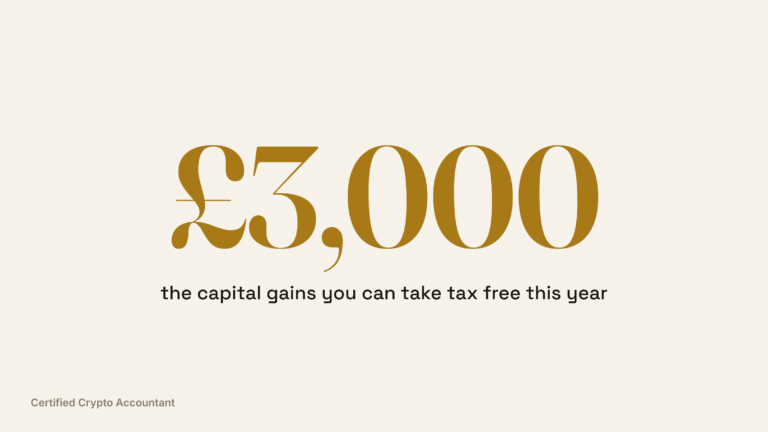
From death onwards, growth is yours and taxable like anything else. Sell the inherited house two years later for £430,000 and the taxable gain is £30,000, the growth since death, less selling costs and your £3,000 allowance, taxed at the second property rates unless you moved in and made it your home. And because it is UK residential property, the 60 day reporting deadline applies to that sale like any other.
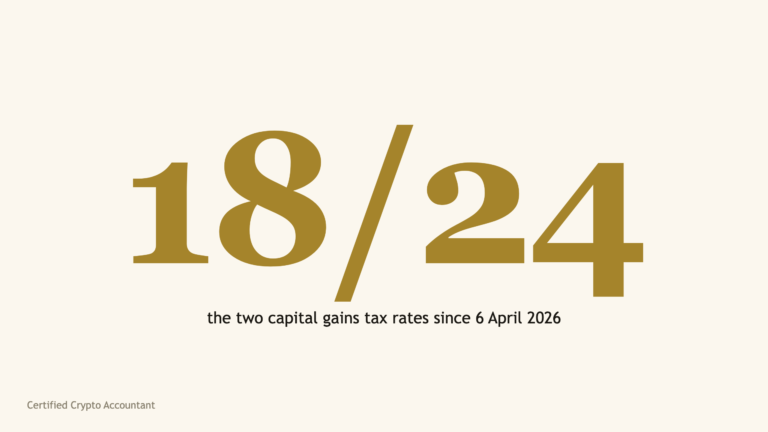
Two owners matter here, and they are taxed differently. If the executors sell during the administration of the estate, the estate pays capital gains tax itself, at the flat 24% that applies to personal representatives, with its own allowance rules. If the asset is transferred to you first and you sell, your personal rates and allowance apply. Which route is cheaper depends on the numbers, and it is a genuine choice that gets made carelessly by default, usually in the solicitor’s office, usually without anyone running the comparison.
Crypto passes through the same machinery
Inherited coins get the same uplift to date-of-death value, and the same practical warning applies double: the valuation and the access both need documenting, because an unrecorded wallet is an asset the estate cannot value and the heir cannot reach. We wrote about the whole area, including what executors need, in what your heirs will owe on crypto they inherit.
Inheritance and CGT questions
Do I pay capital gains tax on money or property I inherit?
No. Nothing is due on inheriting. Capital gains tax only becomes relevant if you later sell, and then only on growth since the date of death.
What is my cost basis for inherited shares or property?
Market value at the date of death, usually the probate valuation. Document it and keep it, it is the anchor of every future calculation.
Is it better for the estate or the beneficiary to sell?
It depends. Estates pay a flat 24% with limited allowances, beneficiaries pay their own rates with their own allowance, and splitting an appointment across several beneficiaries can multiply allowances. Worth an hour’s advice before anything is signed, not after.
The house has fallen in value since death. Anything to claim?
Possibly, in both directions. A sale below probate value can create a capital loss for the seller, and for inheritance tax there are separate reliefs when property or shares are sold below the death value within set periods. Falling markets after a death are exactly when advice earns its keep.
If an estate you are part of holds property, portfolios or crypto, the decisions about who sells what, and when, move real money between the taxman and the family. Our free review can look at the position before it becomes irreversible.
Sources
Every figure on this page was checked against the source below on 25 August 2026.
- Inheritance tax. GOV.UK, checked 25 August 2026
- GOV.UK. GOV.UK, checked 25 August 2026
- Section 62 of TCGA 1992. legislation.gov.uk, checked 25 August 2026
- Flat 24% that applies to personal representatives. GOV.UK, checked 25 August 2026
Fahad Zar
Crypto tax accountantAAT licensed 1010475
- AAT Licensed Accountant and MAAT, licence 1010475
- MSc Accounting and Finance, BPP University London
- Six years inside digital asset accounting, across several crypto tax firms
- Practises through Zar Enterprises Ltd, ICO registration ZC225094
- Supervised for anti-money laundering by the AAT
What matters to me is that the number on the return is true, whatever it turns out to be.
Whether this is worth a conversation
Most people who read this page do not need an accountant. A few do.
- Your gains are near the £3,000 line
- You have swapped tokens and doubt the numbers
- You have old losses nobody ever claimed
If you sold one holding once and the figures are plain, file it yourself. Paying someone to check arithmetic you can do is not a service.
If one of these is you, the first look costs nothing.
Read next
Your capital gains tax allowance for 2026 to 2027
£3,000 per person, resets each April, never carries forward. How the annual exempt amount works, the spouse doubling,…
Reviewed 25 Aug 2026ExplainerHow to report capital gains on your Self Assessment
Gains go on the SA108, property runs on its own 60 day track, and proceeds over £50,000 mean reporting even with no tax…
Reviewed 25 Aug 2026ExplainerCapital gains tax on shares and the 30 day trap
Share matching rules define your cost, the 30 day rule rewrites rebuys, and accumulation funds hide base cost. What…
Reviewed 25 Aug 2026DeadlineUnclaimed capital losses expire after four years
A loss HMRC has never been told about is worth nothing, and the claim window closes four years after the tax year ends.…
Reviewed 25 Aug 2026