Can HMRC take money out of your bank account

Published 3 August 2026· Reviewed against gov.uk 25 August 2026· 4 min read·HMRC and compliance
Yes, HMRC can take money directly from your bank account, and since autumn 2025 it has started doing so again. The power is called Direct Recovery of Debts, it lets HMRC instruct your bank to hand over money without a court order, and it comes wrapped in safeguards that mean almost everyone reading this sentence is not at risk from it. The people who are at risk share one behaviour, and it is not owing money. It is ignoring every attempt at contact.
Here is how the power actually works, from HMRC’s own published framework.
The thresholds and the safeguards
Direct recovery applies to established debts of £1,000 or more, tax or tax credit debts where every appeal route has run out. It reaches bank accounts, building society accounts and cash ISAs, which surprises people who assumed the ISA wrapper protected something.
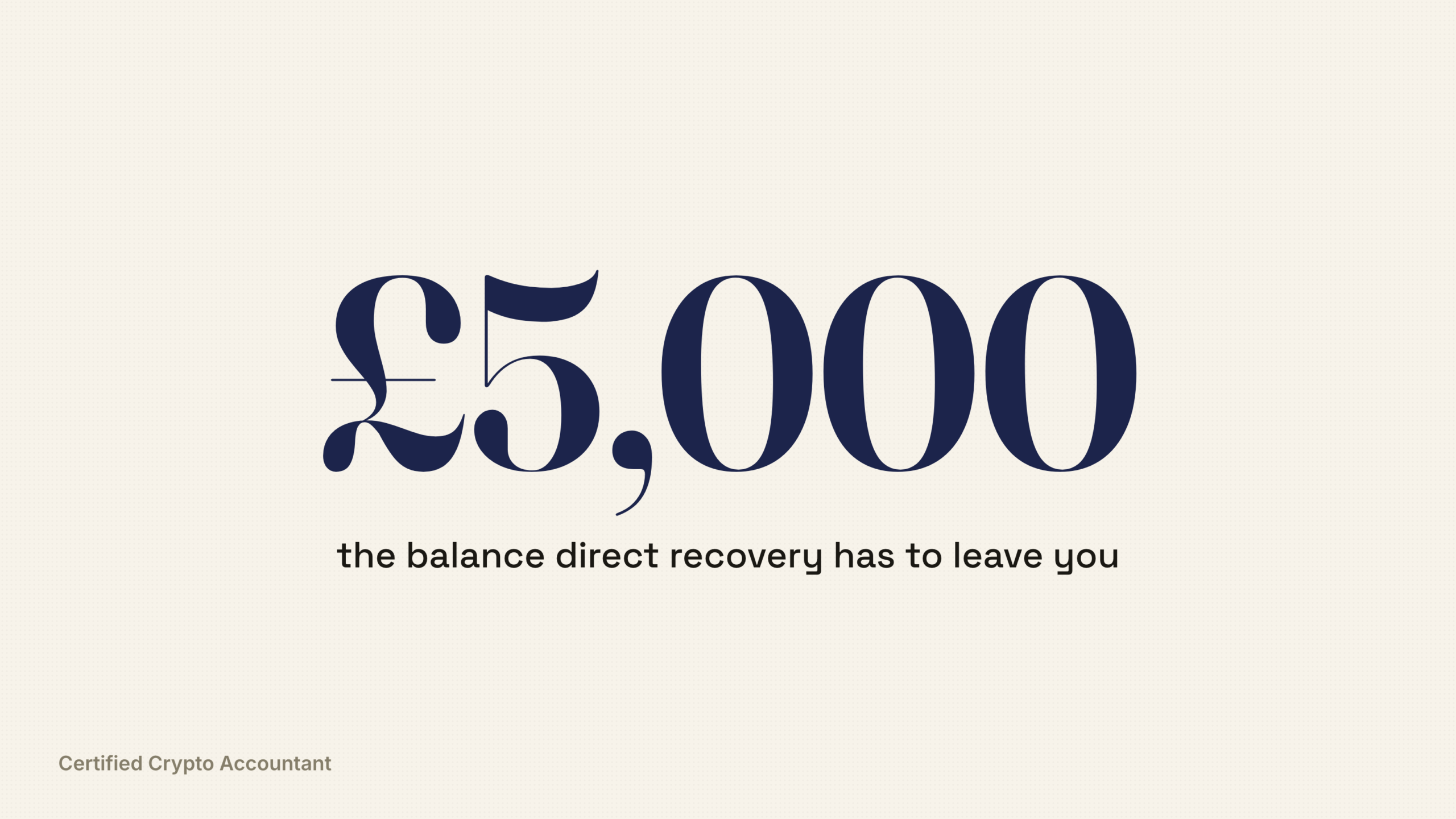
Now the other side. HMRC must leave at least £5,000 across your accounts after any recovery, so the power cannot empty you. Before an account is touched at all, you get a face to face visit from an HMRC officer, at which point you can agree a payment plan, dispute the debt, or be identified as vulnerable and routed out of the process entirely. If recovery still goes ahead, the money is frozen rather than taken, and you have 30 days to object to HMRC or appeal to a county court before anything actually moves. The ICAEW’s note on the restart is a good professional summary of where the power now stands.
Add that sequence up. Letter, letter, letter, visit, hold, 30 days. Nobody gets to a frozen account without months of ignored contact. That is the honest answer to the fear behind this search, and it is also the reason the fear is worth taking seriously if you are the person with the unopened envelopes.
The gentler cousin nobody notices
Most tax debt never gets anywhere near direct recovery, because HMRC has a far less dramatic route, your tax code. Smaller Self Assessment debts and PAYE underpayments are routinely collected by adjusting next year’s code, which spreads the debt across twelve months of payslips. People search for “HMRC bank account deductions” having noticed their take-home pay drop, and the answer is sitting in a coding notice they did not read. If your pay changed and you do not know why, check the code first. Our guide to reading HMRC letters covers coding notices among the rest.
If you owe and cannot pay
The system is built to prefer instalments over enforcement at every stage. A time to pay arrangement can often be set up online without speaking to anyone, and once it is in place and being honoured, escalation stops. Interest still runs, but penalties and enforcement do not. The order of operations that ruins people is silence, then panic. The order that works is contact, then a plan.
If the debt itself is wrong, that is a different problem with a different clock. Assessments can be appealed, but the windows are short, and an assessment that goes unchallenged becomes established, which is precisely what direct recovery feeds on. An hour spent checking whether HMRC’s number is even right is never wasted. Wrong numbers are common where crypto is involved, because software-generated figures inflate gains more often than they understate them.
Quick answers
Can HMRC take money without telling me?
No. The process requires ignored contact, a face to face visit, and a hold period with objection rights before any money moves. Surprise is not part of the design.
Can HMRC touch my ISA?
Cash ISAs are within the direct recovery power’s scope. The £5,000 floor still applies across your accounts as a whole.
Can HMRC take money from a joint account?
Joint accounts are approached on a pro rata basis rather than treated as wholly yours, so a co-holder’s share is not simply absorbed into your debt.
What should I do if I have had the face to face visit?
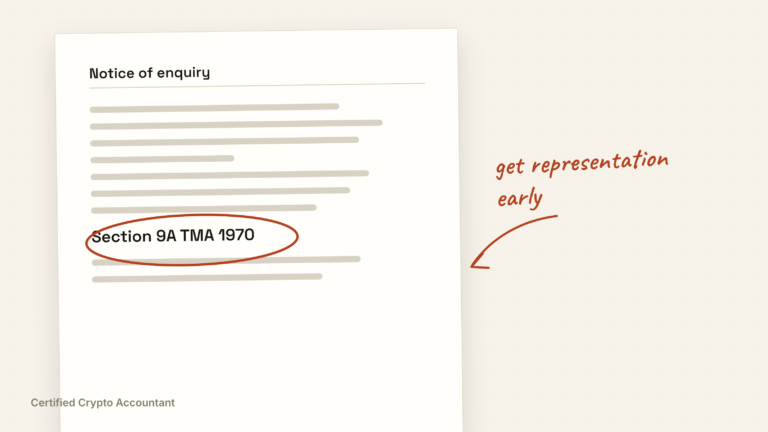
Treat it as the last cheap exit. Agree a payment plan if the debt is right, or get representation immediately if it is wrong. After the visit, the next step is the account hold, and your options narrow.
If HMRC says you owe something and you are not convinced the number is right, that is exactly the kind of thing our free review exists for. Checking before paying beats disputing after.
Sources
Every figure on this page was checked against the source below on 25 August 2026.
- HMRC’s own published framework. GOV.UK, checked 25 August 2026
- ICAEW’s note on the restart. ICAEW, checked 25 August 2026
- The code. GOV.UK, checked 25 August 2026
- Time to pay arrangement. GOV.UK, checked 25 August 2026
Fahad Zar
Crypto tax accountantAAT licensed 1010475
- AAT Licensed Accountant and MAAT, licence 1010475
- MSc Accounting and Finance, BPP University London
- Six years inside digital asset accounting, across several crypto tax firms
- Practises through Zar Enterprises Ltd, ICO registration ZC225094
- Supervised for anti-money laundering by the AAT
What matters to me is that the number on the return is true, whatever it turns out to be.
Whether this is worth a conversation
Most people who read this page do not need an accountant. A few do.
- A letter from HMRC has arrived
- You have years HMRC does not know about
- HMRC's figures do not match yours
If your letter is a routine tax code notice and your filings are current, you probably just needed this page.
If one of these is you, the first look costs nothing.
Read next
Crypto tax deadlines for the 2026 to 2027 tax year
Key UK crypto tax dates for 2025/26: Self Assessment registration, the 31 January filing and payment deadline, and what…
Reviewed 25 Aug 2026Deep guideHow much HMRC can charge for unpaid crypto tax
What HMRC crypto tax penalties actually cost: late filing, late payment and undeclared gains. How penalties are…
Reviewed 25 Aug 2026ExplainerHow to tell a real HMRC letter from a scam
HMRC never threatens arrest and never asks for bank details to pay a refund. The thirty second sorting method, and…
Reviewed 25 Aug 2026DeadlineThe HMRC savings tax warning is about your bank interest
Banks report interest automatically and rising rates pushed ordinary savers over the £1,000 allowance. What the letters…
Reviewed 25 Aug 2026