
Does Revolut Report to HMRC? Crypto on Revolut Explained

Published 9 July 2026· Reviewed against gov.uk 25 August 2026· 7 min read·HMRC and compliance
If you have bought, sold or swapped crypto inside the Revolut app, you have probably asked yourself a quiet, slightly anxious question: does Revolut report to HMRC? The short, honest answer is that Revolut is a UK-regulated financial firm with full identity checks, so your name, your account and your activity are already linked. Like other providers, it can be required to share information with the tax authorities, and the direction of travel is firmly towards more reporting, not less.
This guide explains calmly what Revolut knows about you, what is shared with HMRC now versus what will be reported automatically from 2026, why your Revolut crypto trades are taxable just like trades on any exchange, and the sensible steps to take so you are never caught on the wrong side of a data match.
Does Revolut report to HMRC?
When people ask “does Revolut report to HMRC”, they usually mean two things: does HMRC already know who I am, and is my transaction data being handed over. On the first point, the answer is effectively yes by design. Revolut is a UK-regulated firm that applies Know Your Customer (KYC) identity checks when you open an account, so your legal name and details are verified and attached to everything you do in the app, including crypto.
On the second point, the picture is changing fast. UK firms can already be required to provide information to HMRC on request, and HMRC has spent years gathering crypto data from providers to cross-check against tax returns. From 2026 that becomes systematic rather than ad hoc, as explained below. The takeaway is that operating on Revolut is not anonymous: plan your tax position on the assumption that HMRC can see your activity.
How revolut’s KYC ties your identity to your crypto
KYC is the regulatory process that links a real, verified person to a financial account. Because Revolut is regulated in the UK, it must confirm who you are before letting you transact and keep that on file. In practice there is no meaningful gap between “an anonymous wallet” and “you”: the crypto bought, sold or swapped in your account is recorded against your verified identity.
That matters because HMRC’s enquiries almost always start with a name and a data point that do not line up with a filed return. If a provider reports that a verified individual disposed of crypto and HMRC sees nothing on that person’s Self Assessment record, that mismatch is what triggers a letter. Strong KYC removes any illusion of invisibility.
What is shared now versus automatically from 2026 under CARF
Right now, information generally reaches HMRC through targeted routes: statutory information requests, data-gathering exercises, and international exchange agreements. From 1 January 2026 a new, automatic channel comes into force. Under the Cryptoasset Reporting Framework (CARF), UK crypto-asset service providers must collect and report user identity and transaction data to HMRC. The first report is due by 31 May 2027, covering the 2026 calendar year, with data on non-UK users then exchanged internationally.
The practical effect is that HMRC will routinely receive a feed showing who traded what, the same logic that already underpins bank interest reporting. The table below sets out the two phases side by side.
| Aspect | Position now | From 1 January 2026 under CARF |
|---|---|---|
| Your identity | Verified via KYC, held by the provider | Reported to HMRC |
| Transaction data | Shared on request | Reported automatically each year |
| First report | No fixed annual cycle | Due by 31 May 2027 (2026 year) |
| Your duty to report | Sits with you | Still sits with you |
Why disposals on Revolut are Capital Gains Tax events
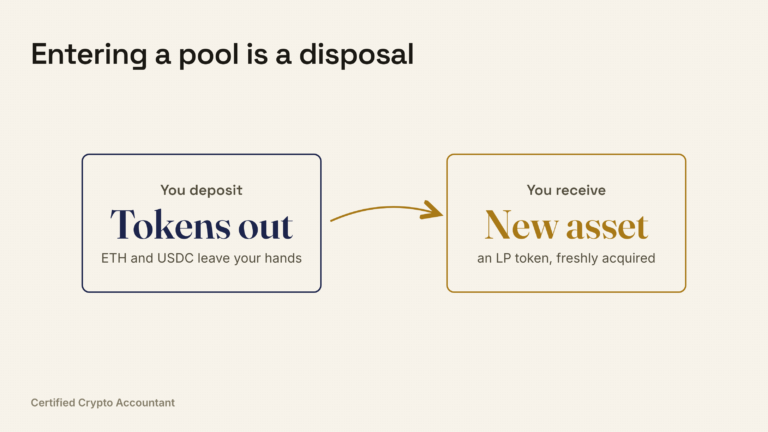
A common misconception is that crypto only becomes taxable when you withdraw to a bank account. It does not. Under HMRC’s Cryptoassets Manual, selling or swapping crypto on any platform, including Revolut, is a disposal for Capital Gains Tax. That covers selling crypto for pounds and swapping one token for another, even if you never move a penny into your current account.
Buying crypto with pounds is not itself a taxable event, and neither is simply holding it. The tax point is the disposal. For 2026/27 you have a CGT annual exempt amount of £3,000, and gains above that are taxed at 18% within your basic-rate band and 24% above it for disposals made on or after 30 October 2024. If your activity also looks like trading or you earn rewards, income tax rules can apply instead, which is one reason a review pays off.
The duty to report sits with you, not with Revolut
This is the point that resolves most of the anxiety. Whatever Revolut does or does not send you, and whatever it does or does not report under CARF, the legal obligation to declare your gains and income is yours. A provider report is not your tax return. If you have a taxable gain above the annual exempt amount, you must register for Self Assessment where needed, report it, and pay any tax due by the deadline.
Treat any in-app summary as a starting point, not a complete tax calculation. Revolut-specific tooling can vary, so do not assume a single figure captures your full position across every account and wallet you hold.
A worked example, reporting a Revolut crypto disposal
Priya buys £10,000 of Bitcoin in her Revolut account during 2025/26. Later that year she sells the lot for £14,500, a gain of £4,500. She has made no other disposals, so she applies the £3,000 annual exempt amount, leaving a taxable gain of £1,500.
Priya is a basic-rate taxpayer with room in her band, so the 18% rate applies. The Capital Gains Tax due is 18% of £1,500, which is £270. She reports the disposal through Self Assessment for 2025/26 and pays the £270 by the deadline. The £14,500 never had to leave Revolut for the tax to arise: the sale itself is the disposal.
How a specialist handles it
When a client is unsure whether their Revolut activity has been reported correctly, we work data first. We reconcile every Revolut transaction alongside any other exchanges and wallets, match the disposals to the right tax year, and calculate the true gain or income. If a correction or disclosure is needed, we choose the right route and deal with HMRC directly, so the position is clean before any CARF report lands.
Revolut is usually one of several platforms in a history, and our crypto tax accountants rebuild all of them into one pool before the return.
Frequently asked questions
Does Revolut tell HMRC about my crypto?
Revolut can be required to share information with HMRC, and from 1 January 2026 UK crypto-asset service providers must report user identity and transaction data automatically under CARF, with the first report due by 31 May 2027. Either way, your own duty to report does not change.
Is crypto on Revolut taxable in the UK?
Yes. Selling or swapping crypto on Revolut is a disposal for Capital Gains Tax, just like on any exchange. Buying and holding are not taxable; the tax point is the disposal.
Do I pay tax if I never withdraw to my bank?
Yes, if you have disposed of crypto. The taxable event is the sale or swap, so a gain can arise even while the money stays inside Revolut.
What is the crypto Capital Gains Tax rate?
For disposals on or after 30 October 2024, gains above the annual exempt amount are taxed at 18% within your basic-rate band and 24% above it. The annual exempt amount for 2026/27 is £3,000.
What records should I keep from Revolut?
Keep a full export of your buys, sells and swaps with dates and pound values, plus the same for any other platforms. Good records keep your Self Assessment accurate and let you respond confidently if HMRC asks.
What if I have not reported past Revolut gains?
You can put it right. HMRC has a route to tell HMRC about unpaid tax on cryptoassets, and coming forward voluntarily generally means lower penalties than waiting for a data match to catch you.
Get a confidential review before the data match finds you
If Revolut crypto has left you unsure where you stand, the sensible step is to check your position now, while you control the timing. Book a free, confidential review at certifiedcryptoaccountant.com and we will tell you plainly whether anything is owed. You can also explore our crypto tax services for UK clients, from reconciliation to HMRC disclosures.
Answering HMRC well is mostly a matter of having the underlying figures straight before you reply. If those figures involve exchange and wallet history, our crypto tax accountants rebuild them, and the capital gains tax calculator will give you a rough position in the meantime.
Sources
Every figure on this page was checked against the source below on 25 August 2026.
- Self Assessment. GOV.UK, checked 25 August 2026
- Cryptoasset Reporting Framework (CARF). GOV.UK, checked 25 August 2026
- Cryptoassets Manual. GOV.UK, checked 25 August 2026
- Capital Gains Tax. GOV.UK, checked 25 August 2026
- Tell HMRC about unpaid tax on cryptoassets. GOV.UK, checked 25 August 2026
Fahad Zar
Crypto tax accountantAAT licensed 1010475
- AAT Licensed Accountant and MAAT, licence 1010475
- MSc Accounting and Finance, BPP University London
- Six years inside digital asset accounting, across several crypto tax firms
- Practises through Zar Enterprises Ltd, ICO registration ZC225094
- Supervised for anti-money laundering by the AAT
What matters to me is that the number on the return is true, whatever it turns out to be.
Whether this is worth a conversation
Most people who read this page do not need an accountant. A few do.
- A letter from HMRC has arrived
- You have years HMRC does not know about
- HMRC's figures do not match yours
If your letter is a routine tax code notice and your filings are current, you probably just needed this page.
If one of these is you, the first look costs nothing.
Read next
Crypto tax deadlines for the 2026 to 2027 tax year
Key UK crypto tax dates for 2025/26: Self Assessment registration, the 31 January filing and payment deadline, and what…
Reviewed 25 Aug 2026Deep guideHow much HMRC can charge for unpaid crypto tax
What HMRC crypto tax penalties actually cost: late filing, late payment and undeclared gains. How penalties are…
Reviewed 25 Aug 2026ExplainerHow to tell a real HMRC letter from a scam
HMRC never threatens arrest and never asks for bank details to pay a refund. The thirty second sorting method, and…
Reviewed 25 Aug 2026DeadlineThe HMRC savings tax warning is about your bank interest
Banks report interest automatically and rising rates pushed ordinary savers over the £1,000 allowance. What the letters…
Reviewed 25 Aug 2026