Stamp duty reserve tax is the 0.5% you pay without noticing

Published 25 August 2026· Reviewed against gov.uk 25 August 2026· 4 min read·Capital gains tax
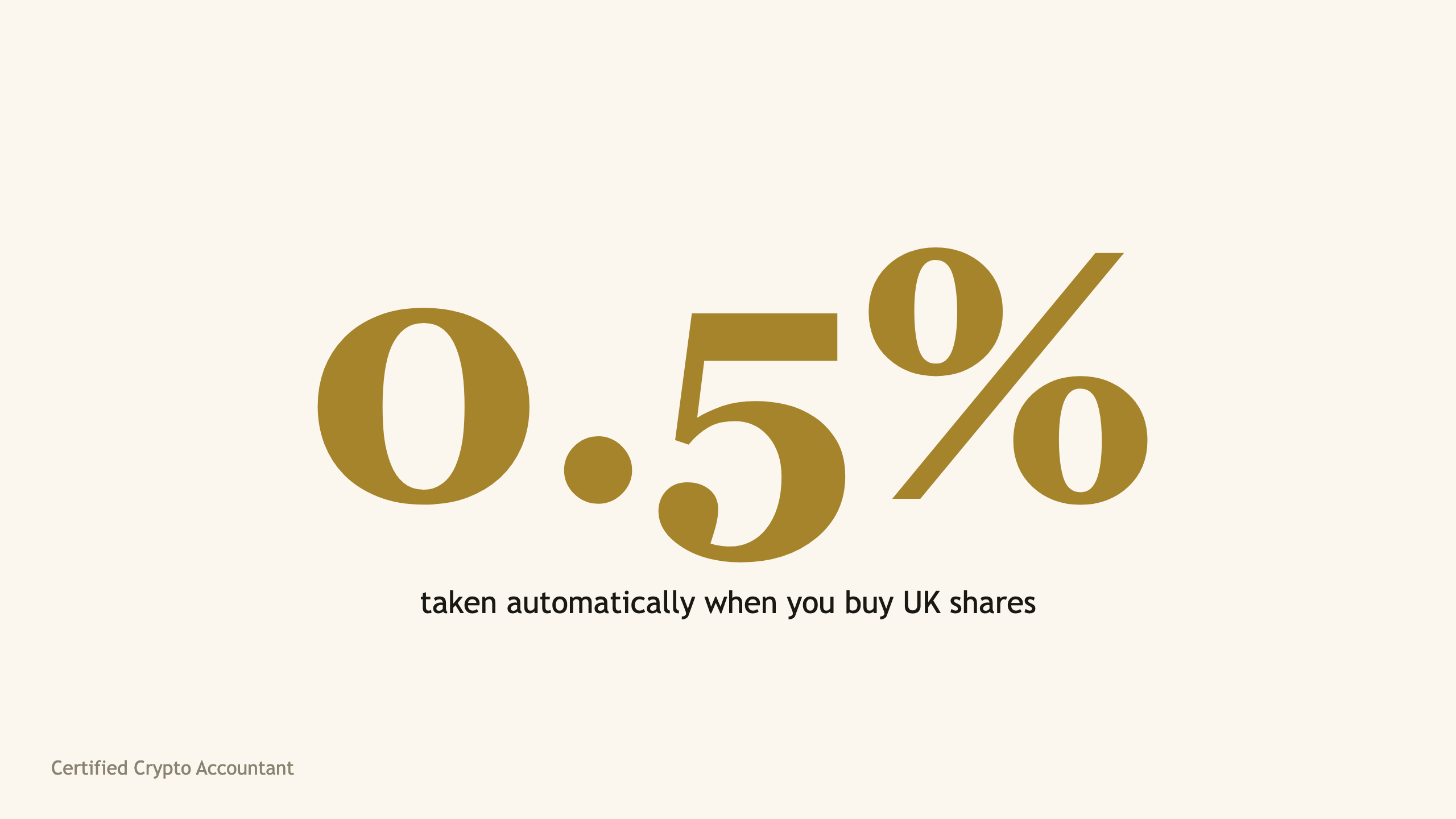
Every time you buy shares in a UK company through a broker app, a tax is collected that most investors have never consciously paid. Stamp duty reserve tax takes 0.5% of the purchase price on electronic transactions, rounded into the settlement so smoothly that it reads as part of the price, per GOV.UK. Buy £10,000 of shares and £50 has gone before the shares are yours.
Its older sibling, stamp duty, still exists for paper transactions, share purchases on a stock transfer form pay it once the deal tops £1,000. Nearly everything retail is electronic now, so SDRT is the one that actually touches you.
You cannot avoid SDRT on UK shares and you do not need to, you need to keep the contract notes, because every half percent paid going in reduces the gain taxed coming out.
What you pay it on
The charge lands on buying existing shares in UK incorporated companies, options over them, interests in them, and foreign companies that keep a share register in the UK. The seller pays nothing, this is a buyer’s tax. It is charged on the price you pay, not the market value, in the ordinary case.
What escapes it
New issues do not pay, subscribe in an IPO or a new funding round and there is no SDRT. Gifts of shares for nothing do not pay. Buying units in a unit trust or shares in an OEIC from the fund manager does not pay, which is why ordinary index fund investing avoids the charge even outside an ISA. Foreign shares bought outside the UK with no UK register are outside the net entirely, US shares on a US exchange carry no UK stamp taxes at all.
Crypto sits outside too. Whatever else crypto trading costs in tax, there is no SDRT on it, the charge is a securities tax and tokens are not shares.
The 1.5% rate, briefly
Transfers into some depositary receipt schemes and clearance services are charged at 1.5% rather than 0.5%. Retail investors mostly meet this through corporate actions rather than choices, but if a transfer you are making touches a depositary structure, the tripled rate is worth knowing before rather than after.
Where it meets capital gains tax
SDRT is not lost money for tax purposes. It is a cost of acquisition, which means it joins your cost basis and reduces the gain you are taxed on when you sell. On a £10,000 purchase, the £50 SDRT makes your base cost £10,050. Small on one trade, meaningful across a portfolio’s life, and exactly the kind of allowable cost that the capital gains computation is built from. Keep the contract notes, they carry the number.
The stamp duty on the way in becomes part of the cost on the way out, and our capital gains tax accountants carry it through to the disposal.
Questions on the half percent
What is the difference between stamp duty and stamp duty reserve tax?
Stamp duty applies to paper share transfers over £1,000 using a stock transfer form. SDRT applies to electronic purchases, which is nearly all of them, at 0.5% collected automatically.
Do I pay stamp duty on US shares?
Not to the UK. Foreign shares bought outside the UK with no UK share register are outside SDRT. The purchase may carry other countries' charges.
Do I pay SDRT inside an ISA?
Yes. The ISA shelters income and gains, but SDRT is charged on the purchase itself, so buying UK shares inside an ISA still pays the 0.5%.
Is there stamp duty on crypto?
No. SDRT is a tax on securities transactions. Crypto disposals are taxed under capital gains rules instead.
Sources
Every figure on this page was checked against the source below on 25 August 2026.
- Tax when you buy shares. GOV.UK, checked 25 August 2026
- Capital Gains Tax, work out your gain. GOV.UK, checked 25 August 2026
- Stamp taxes on shares manual. HM Revenue and Customs, checked 25 August 2026
Fahad Zar
Crypto tax accountantAAT licensed 1010475
- AAT Licensed Accountant and MAAT, licence 1010475
- MSc Accounting and Finance, BPP University London
- Six years inside digital asset accounting, across several crypto tax firms
- Practises through Zar Enterprises Ltd, ICO registration ZC225094
- Supervised for anti-money laundering by the AAT
What matters to me is that the number on the return is true, whatever it turns out to be.
Whether this is worth a conversation
Where this stops being a reading job and starts being a hiring one.
- Share purchases across brokers need untangling
- A 1.5% charge appeared out of nowhere
- You are moving holdings between schemes
If you buy index funds from the manager inside an ISA, congratulations, this tax does not apply to you and never has.
If one of these is you, the first look costs nothing.
Read next
Capital gains tax on shares
Where the 0.5% you paid going in finally earns its keep.
Reviewed 25 August 2026Deep guideWhat capital gains tax is and how it is worked out
The computation your contract notes feed into.
Reviewed 25 August 2026ExplainerCFD and spread betting tax
The derivatives route that avoids SDRT and what it costs instead.
Reviewed 25 August 2026ExplainerYour capital gains tax allowance for 2026 to 2027
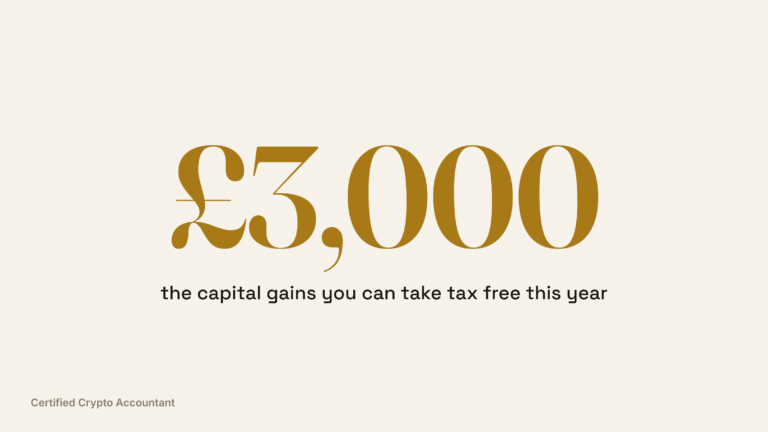
The £3,000 that decides whether the sale is taxed at all.
Reviewed 25 August 2026