The HMRC warnings doing the rounds, sorted into real and noise

Published 25 August 2026· Reviewed against gov.uk 25 August 2026· 4 min read·HMRC and compliance
Every few weeks a new HMRC warning does the rounds, and they all arrive in the same breathless shape whether the underlying thing is real or not. Some of them matter. Some are a three year old story reheated. The fastest way to sort them is to know what HMRC is actually doing at the moment, and there is a page for that, HMRC’s own list of genuine letters currently in circulation, which was updated as recently as this month.
A real HMRC warning always survives one test, the claim exists on gov.uk. Apply the test before the warning applies to you.
The warnings that are real
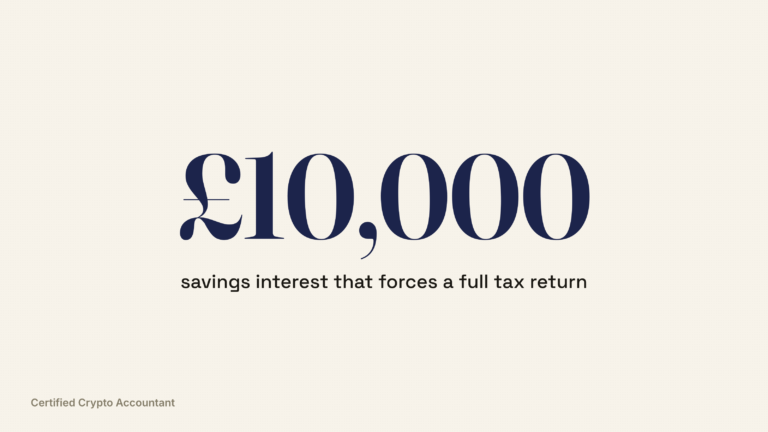
Savings interest. Banks report the interest they pay you automatically, and after several years of higher rates, ordinary savers pass the £1,000 personal savings allowance without noticing. HMRC collects the tax by adjusting tax codes or issuing calculation letters. This one is genuine and getting bigger, and our guide to the savings tax letters covers what the letters look like and what to do.
Tax code changes. A changed code is HMRC changing how much tax comes out of your pay, sometimes to collect something it believes you owe. The warning worth heeding is not the change itself but ignoring it, since a wrong code compounds every payday. Your current code is in the app and your online account, and checking it takes a minute.
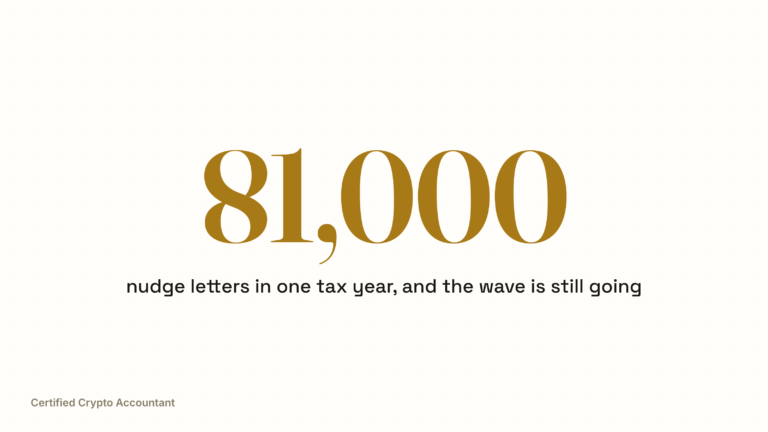
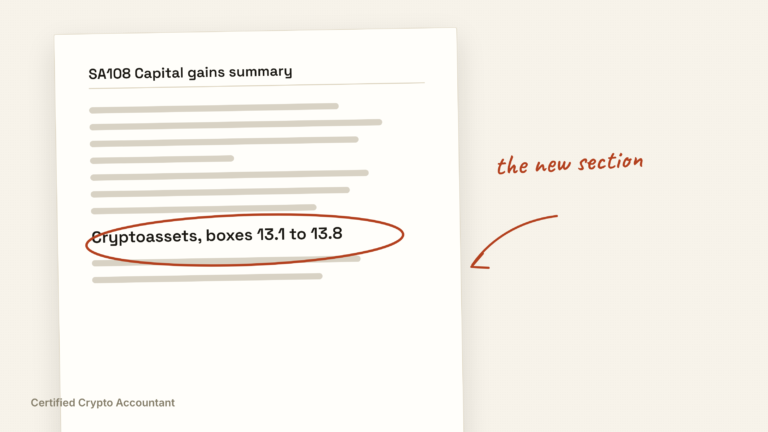
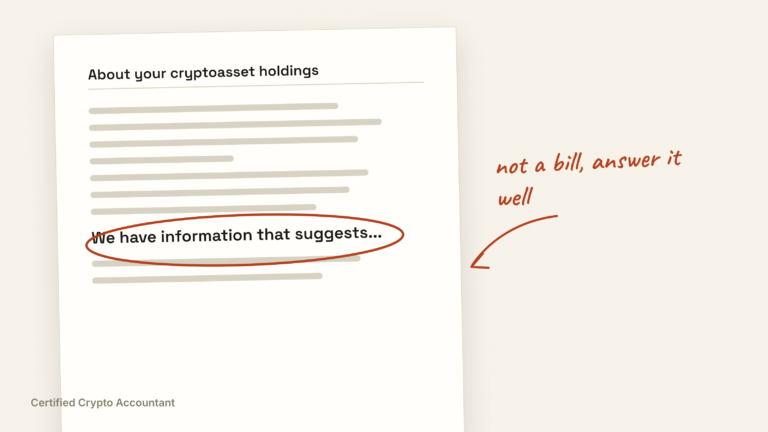
Crypto letters. HMRC holds exchange data and writes to people it believes have disposed of cryptoassets. These nudge letters are real, they are prompts rather than accusations, and the correct response is to check your position before replying. Our nudge letter guide walks through it, and from January 2026 the CARF reporting framework widens what HMRC receives automatically.
Side income reporting. Marketplaces report seller data under rules that reached eBay and Vinted. The reporting is real. What the warnings usually get wrong is the tax, since most casual sellers owe nothing, the platforms merely report.
The noise
Refund messages with links. HMRC does not announce rebates by text, email or WhatsApp with a claim link. Every one of those is a scam, whatever the current wrapper looks like. The tells, in order of reliability, are in our scam guide, and suspicious contact can be reported to HMRC directly through the phishing reporting page.
Recycled stories. A good share of viral HMRC warnings describe rule changes that happened years ago, or that never happened. The test is always the same, find the claim on gov.uk. A genuine change has a page. A warning that cannot point to one is content, not news.
What to actually do with a warning
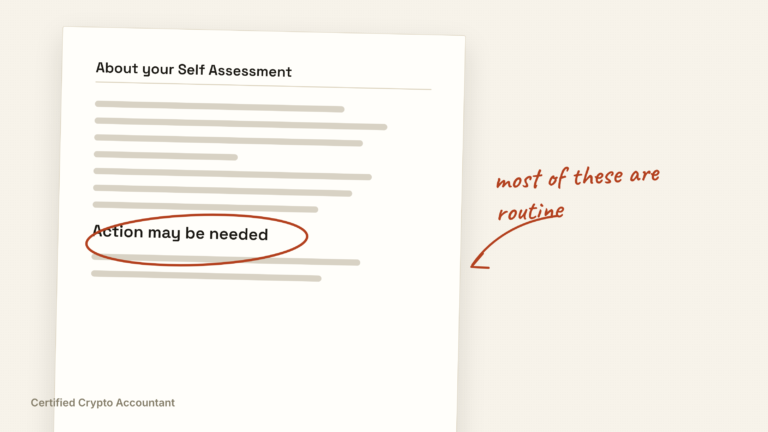
Check the specific claim against the genuine letters list or the relevant gov.uk page. Check your own position, your tax code, your savings interest, your disposals, rather than the general mood. And if a real letter has arrived, deal with the letter, not the headline, our guide to reading an HMRC letter properly is the place to start. Panic is the one response that never helps, mostly because the people sending fake warnings are counting on it.
If the letter is real and it mentions crypto, our crypto tax advisors deal with the reply and the disclosure that usually follows.
Questions on the warnings
Is the HMRC savings tax warning real?
Yes. Banks report interest automatically, higher rates pushed ordinary savers over the £1,000 allowance, and HMRC collects through tax code changes and calculation letters.
How do I check if an HMRC letter is genuine?
HMRC publishes a list of the letters it is currently sending, with a QR code checker. If your letter is not the kind listed and you are unsure, contact HMRC through gov.uk rather than any number on the letter.
Does HMRC send warnings by text?
HMRC does send some texts, but never ones asking for bank details or carrying refund claim links. Messages shaped like that are scams and can be reported through the phishing page.
Are the crypto tax letters real?
Yes. HMRC receives exchange data and writes nudge letters to people it believes disposed of cryptoassets. They are prompts to check your position, not accusations.
Sources
Every figure on this page was checked against the source below on 25 August 2026.
- Check if a letter from HMRC is genuine. HM Revenue and Customs, checked 25 August 2026
- Tax codes. GOV.UK, checked 25 August 2026
- Report suspicious HMRC contact. GOV.UK, checked 25 August 2026
- Tax on savings interest. GOV.UK, checked 25 August 2026
Fahad Zar
Crypto tax accountantAAT licensed 1010475
- AAT Licensed Accountant and MAAT, licence 1010475
- MSc Accounting and Finance, BPP University London
- Six years inside digital asset accounting, across several crypto tax firms
- Practises through Zar Enterprises Ltd, ICO registration ZC225094
- Supervised for anti-money laundering by the AAT
What matters to me is that the number on the return is true, whatever it turns out to be.
Whether this is worth a conversation
Where this stops being a reading job and starts being a hiring one.
- A warning letter is sitting on your desk
- You do not know if yours is routine
- The deadline in it is close
If the warning came from a video and nothing has arrived in the post, check your own numbers and carry on. Most warnings are for someone else.
If one of these is you, the first look costs nothing.
Read next
The HMRC savings tax warning is about your bank interest
The realest of the current warnings, with the thresholds.
Reviewed 25 August 2026ExplainerHow to tell a real HMRC letter from a scam
The noise half of this post, in full.
Reviewed 25 August 2026ExplainerAn HMRC nudge letter is not a tax bill
What the crypto letters actually are and how to respond.
Reviewed 25 August 2026ExplainerA letter from HMRC is rarely as bad as it looks
The general taxonomy of the envelope, warning or not.
Reviewed 25 August 2026