How to register for Self Assessment

Published 8 August 2026· Reviewed against gov.uk 25 August 2026· 4 min read·Self Assessment and side income
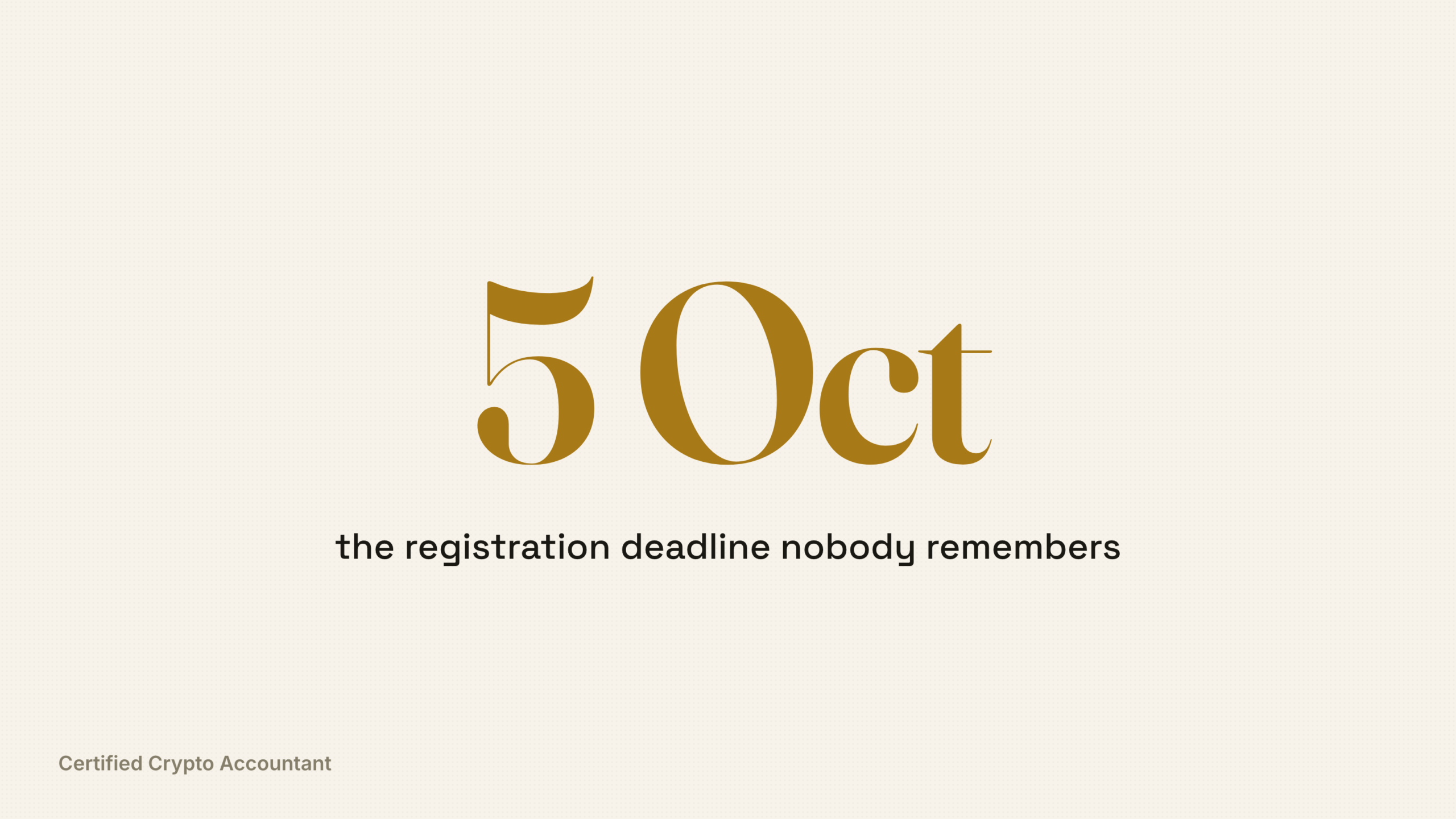
5 October. If you owed tax on anything outside PAYE in the year that ended 5 April, that is your deadline for telling HMRC you need to file a return, per the registration service on GOV.UK. Registering is not filing, the return itself is not due until 31 January. Registration is just raising your hand, and missing that less famous first deadline is how people end up with failure to notify penalties on top of everything else.
Who actually needs to register
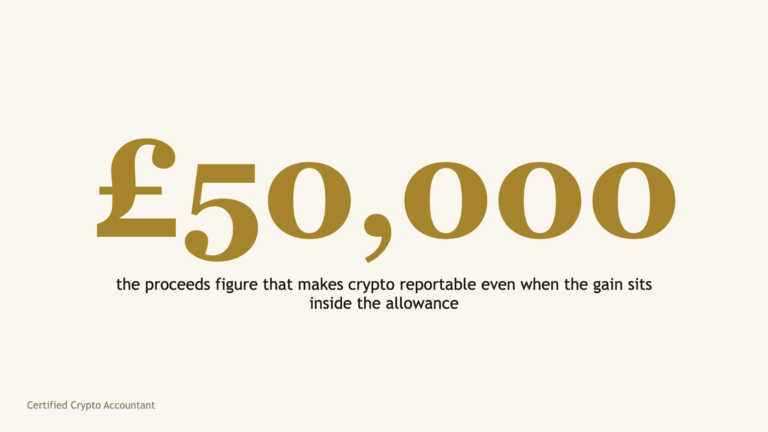
The clean cases first. You were self employed with more than £1,000 of income. You had property income worth reporting. You had capital gains above the £3,000 allowance, or total sale proceeds over £50,000 even without a taxable gain. Your savings and investment income pushed past £10,000. You had foreign income, or you owe the High Income Child Benefit Charge. Any one of these puts you in.
The £1,000 figure doing the work in that first case is the trading allowance. Casual income under it needs nothing at all, no registration, no return. Cross it and you register, even if expenses would wipe out the profit, because the duty to notify follows the income rather than the final bill.
Crypto deserves its own sentence, since it now has its own box on the return. Gains over the allowance, proceeds over £50,000, or income from staking and similar all mean registering, and every crypto-to-crypto swap is a disposal for these purposes, which is how holders who never cashed out to pounds end up needing a return. Our crypto gains guide covers the mechanics.
How registering works
The route runs through your Government Gateway account, and the self employed version registers you for Class 4 National Insurance at the same time. What you are waiting for at the end is a Unique Taxpayer Reference, ten digits that follow you for life. It arrives by post, takes a couple of weeks, and you need it to file, which is one of the two reasons late registration is painful. The other is that HMRC’s systems will not accept a return from someone they do not know exists.
Do not register twice. If you filed before, stopped, and now need to file again, you reactivate the existing UTR rather than creating a new one, using form CWF1 for self employment or the online service otherwise. Duplicate UTRs create administrative knots that take months to untie.
The timeline that keeps you penalty-free
Income arises in the tax year to 5 April. Register by the following 5 October. File online and pay by 31 January. Between October and January sits the part everyone underestimates, actually assembling the numbers, and the crypto version of that job is the slowest of all because exchange records rarely survive contact with reality. The January rush is real, and the people who reconcile in November choose their outcome rather than accepting whatever the software says at 11pm on deadline night.
Miss 31 January and penalties start at £100 and escalate. Miss 5 October and the failure to notify penalty is calculated from the tax eventually due, though it drops to nothing where you registered late but still filed and paid on time. The full deadline map, including payments on account for the year ahead, is in our deadlines guide.
Registration questions
I missed 5 October. How bad is it?
Register immediately anyway. If you still file and pay by 31 January, the failure to notify penalty is normally reduced to nil, because it scales with unpaid tax. The damage grows with delay, not with the confession.
Do I need to register just to report capital gains?
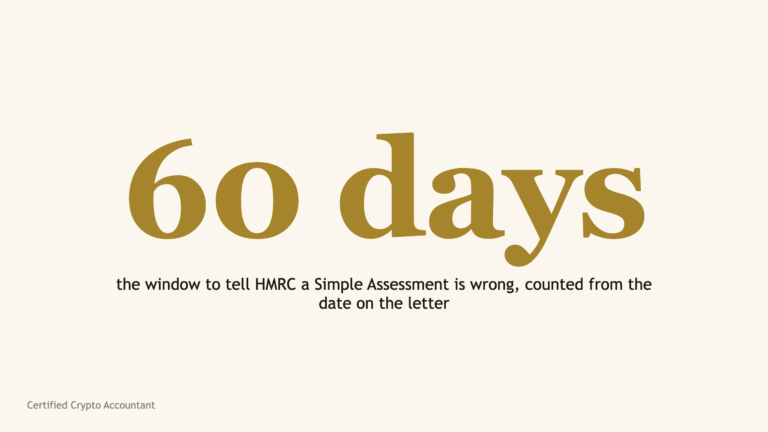
If you are not already in Self Assessment, registering is the standard route for gains above the allowance. Property gains have their own 60 day reporting service that runs separately from all of this.
Does side hustle income under £1,000 need anything?
No. The trading allowance covers it entirely. Keep your own record that the total stayed under, since platforms may still report your activity to HMRC, and being able to show the number beats explaining from memory.
How long does a UTR take to arrive?
Usually within a couple of weeks by post. Register in October and the buffer is comfortable. Register in mid January and you are gambling your filing deadline on Royal Mail.
If what pushed you into Self Assessment is crypto, the return is the easy half, the computation behind it is the work. That is precisely what we do, and the free review will tell you what your first return needs before you commit to anything.
Sources
Every figure on this page was checked against the source below on 25 August 2026.
- The registration service on GOV.UK. GOV.UK, checked 25 August 2026
- Total sale proceeds over £50,000. GOV.UK, checked 25 August 2026
- Trading allowance. GOV.UK, checked 25 August 2026
- File online and pay by 31 January. GOV.UK, checked 25 August 2026
Fahad Zar
Crypto tax accountantAAT licensed 1010475
- AAT Licensed Accountant and MAAT, licence 1010475
- MSc Accounting and Finance, BPP University London
- Six years inside digital asset accounting, across several crypto tax firms
- Practises through Zar Enterprises Ltd, ICO registration ZC225094
- Supervised for anti-money laundering by the AAT
What matters to me is that the number on the return is true, whatever it turns out to be.
Whether this is worth a conversation
Most people who read this page do not need an accountant. A few do.
- Crypto has pushed you into Self Assessment
- Platform income sits alongside your crypto
- A return you already filed looks wrong
If your only question is whether you need to register, the guide above answers it for free.
If one of these is you, the first look costs nothing.
Read next
Your cashback is almost never taxable and HMRC said so in 1997
Ordinary cashback on cards, shopping and bank switching is not taxable for private individuals, per HMRC’s Statement of…
Reviewed 25 Aug 2026ExplainerVinted sellers rarely owe tax even when Vinted reports them
Selling your own clothes below what you paid is never taxable. Why Vinted asked for your details, what gets reported,…
Reviewed 25 Aug 2026ExplainereBay reports your sales to HMRC and most sellers owe nothing
Thirty sales or about £1,700 gets you reported, but reporting is not owing. When selling is tax free, when it becomes…
Reviewed 25 Aug 2026ExplainerHow to change accountants without losing your records
Four steps, a few signatures, and the professional clearance process does the rest. What your old accountant can and…
Reviewed 25 Aug 2026 ExplainerWhat accountants charge for a tax return in 2026 and why crypto changes the number
What the return will cost once you are registered, with crypto and without.
Reviewed 5 September 2026ExplainerDo I need to declare crypto to HMRC
Whether crypto puts you into Self Assessment, with the £3,000, £50,000 and £1,000 tests.
Reviewed 5 September 2026